




The Materials Behind a Lindo Guitar
A closer look at the materials and craftsmanship behind our guitar necks and fingerboards — chosen not only for strength and stability, but also for beauty, detail, and long-term playing confidence.
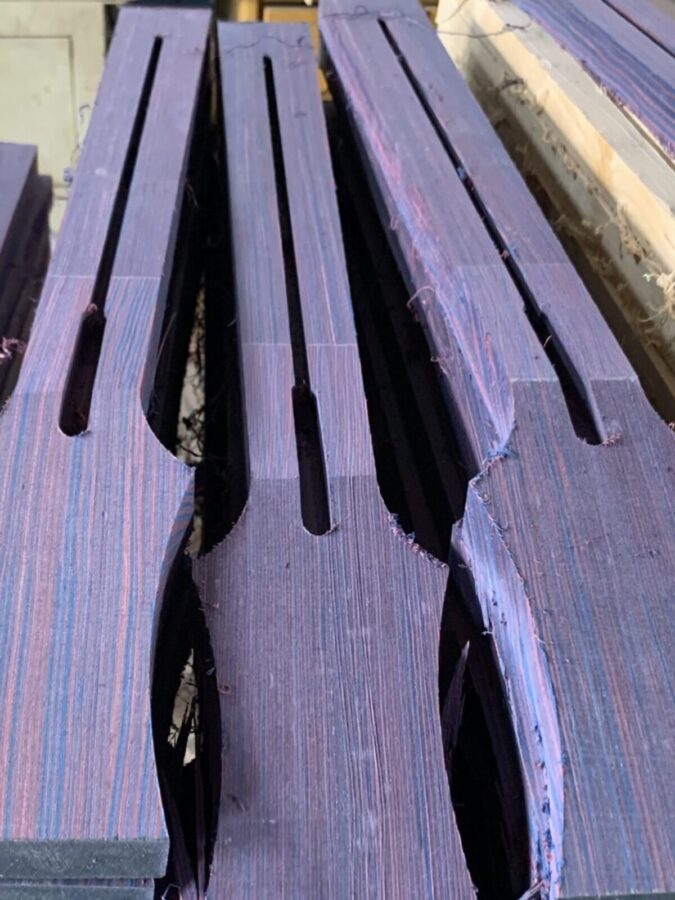
A good guitar does not begin with its final shape.
It begins much earlier.
Before the body is polished, before the strings are fitted, before the guitar is set up and placed into its case, there is a quieter stage of work — choosing the right materials.
For us, this stage matters deeply.
We want our guitars to look beautiful, but beauty alone is not enough. The materials also need to be stable, reliable, comfortable, and suitable for years of playing.
That is why we pay so much attention to the neck and fingerboard.
The neck is one of the most important parts of any guitar. It carries tension, supports the strings, and sits in the player’s hand every time the instrument is played. A neck should feel good, but it should also give the player confidence.
For this reason, we carefully choose materials that offer strength, consistency, and long-term stability.
Some of our neck materials are selected not only for their structure, but also for their appearance. The colour, grain, texture, and layered detail all become part of the guitar’s identity. Even before the neck is shaped and finished, you can already see the character waiting inside the material.
But selecting good material is only the beginning.
The real challenge is how it is worked.
Every cut, every slot, every inlay route, and every finishing stage must be handled with care. Once the fingerboard is prepared, the inlay work begins — and this is where patience becomes essential.
Some of our fingerboard designs use fine natural wood details, abalone shell, symbolic shapes, and carefully arranged patterns. These are not simple decorations placed on top at the end. They must be planned, cut, positioned, fitted, and finished properly.
If the material is unstable, the result will not last.
If the cutting is careless, the detail will not look clean.
If the finishing is rushed, the player will feel it.
That is why we believe good craftsmanship is not only about the parts customers notice immediately. It is also about the preparation, the hidden work, and the small decisions made long before the guitar is complete.
A beautiful inlay starts with accurate planning.
A stable neck starts with the right material.
A comfortable guitar starts with patience.
For us, every Lindo guitar is a balance of these things — carefully selected materials, reliable construction, detailed craftsmanship, and a design that feels special in the player’s hands.
Because a guitar should not only look good on the first day.
It should continue to feel right, play well, and carry its character for years to come.