




Inside the Jupiter, Where the Quiet Work Lives
Before a guitar has strings, it already has a structure to hold them. Inside the Jupiter, a small network of braces and linings gives its expressive outer shape something dependable to rest on.
The Jupiter journal · 07 / 12
A guitar is easy to meet from the outside. Your hand finds the neck, your arm settles against the body, and the first chord tells you where you are. The work supporting that moment usually stays in the dark.
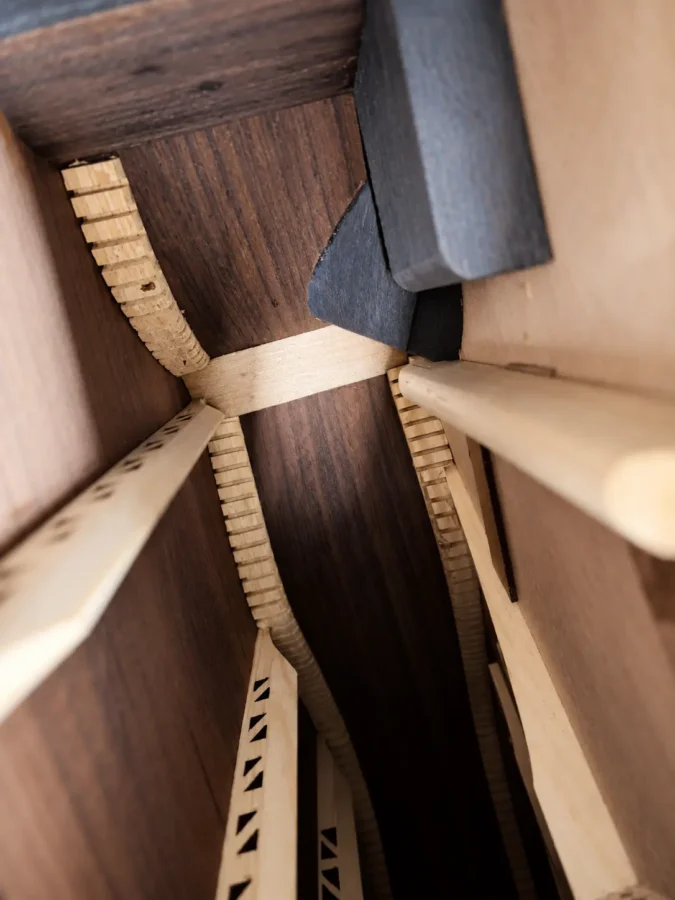
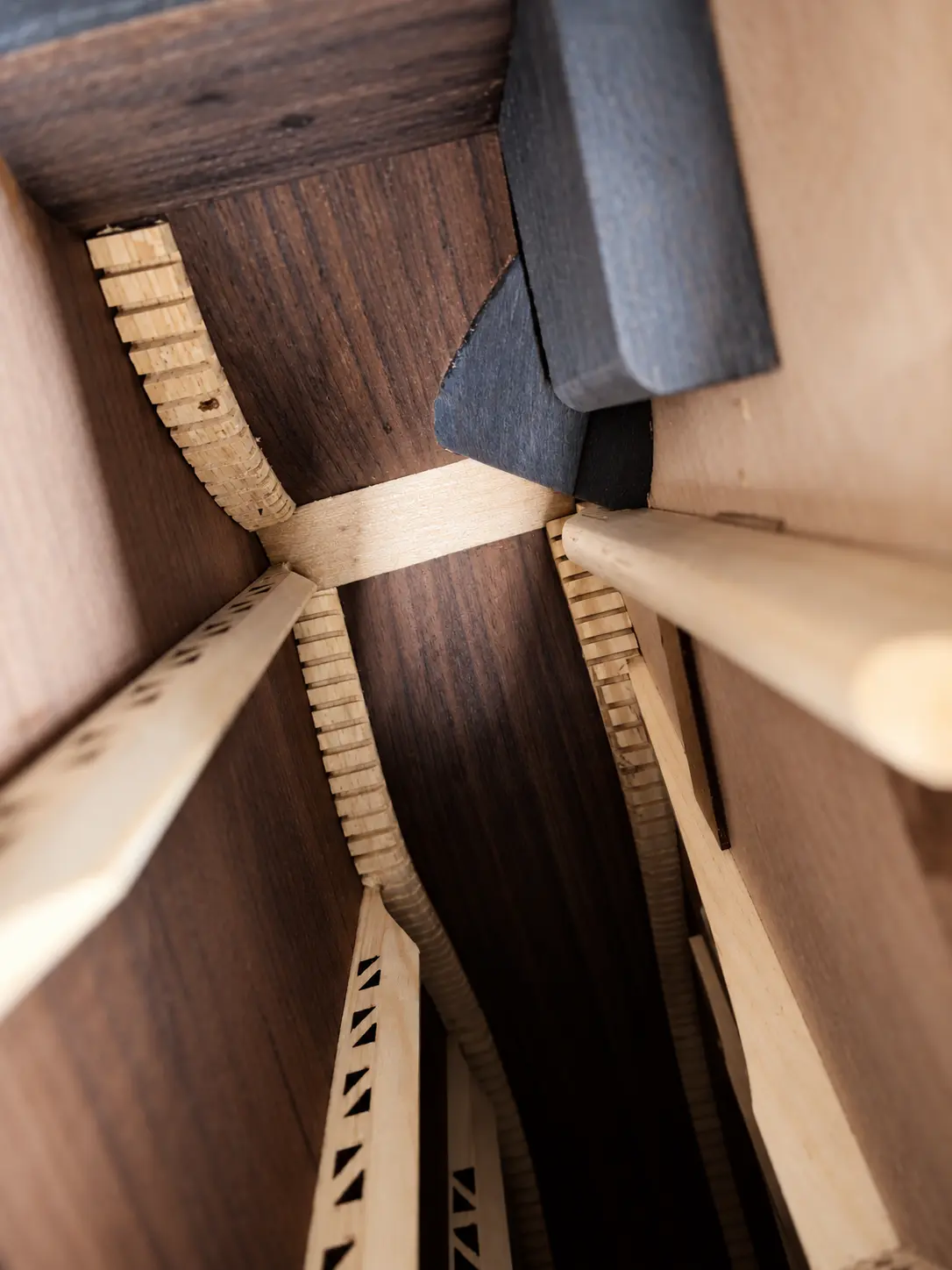
Inside the Jupiter, pale wooden braces run across the darker interior, while short, closely spaced cuts allow the linings to follow the body’s curves. These are practical pieces with different jobs. The linings provide a joining surface around the edges; the braces help support the thin wooden plates that form the body.
The care beneath the surface
Look a little further and the braces reveal an unusual detail: repeated openings within their shape. This is the Jupiter’s hollow-bracing approach. The intention is to place supporting material thoughtfully, leaving openings within a structure that still has work to do. It is a careful arrangement of wood, space and connection.
An acoustic guitar works as a whole. Its body, bracing, strings and setup all contribute to the way it responds under the hand. The hollow shapes are part of that wider design, considered alongside the curves and surfaces you meet on the outside.
What draws us to this hidden view is the attention it asks for. Before the outside can become smooth and inviting, the inside needs its own considered order. Once the instrument is strung and held close, most of that work disappears from sight. It remains there quietly, part of the guitar beneath your hands.