




Before the First Turn: Shaping Jupiter’s Headstock
Before a string is brought into tune, there is a shape waiting at the end of the neck. Jupiter’s headstock brings a small, purposeful piece of its character into the player’s hands.
The Jupiter journal · 10 / 12
There is a familiar little ritual before a song begins. A hand reaches towards the headstock, a machine head turns, and the last wandering note settles into place. It is a moment we wanted the Jupiter to meet with both purpose and personality.
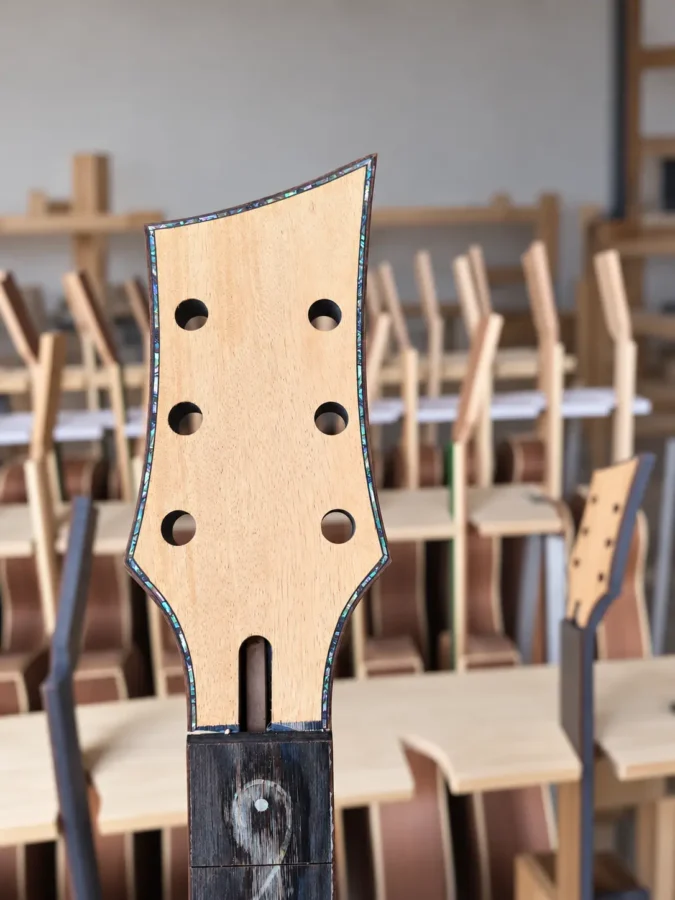
Long before the tuners are fitted, that personality begins with an outline. The headstock narrows towards the neck and opens into an angled crown, continuing the slightly unexpected lines of the guitar below. A delicate decorative border follows its edge. It gives the eye a place to travel without competing with the flowing inlay along the fingerboard.
Where shape meets everyday use
Six carefully placed openings will receive the tuning machines. Below them, the access slot has a different job: it provides a route to the adjustable truss rod inside the neck. Tuning a string and adjusting neck relief are separate tasks, but both belong to the practical life of an instrument that will be played and cared for over time.
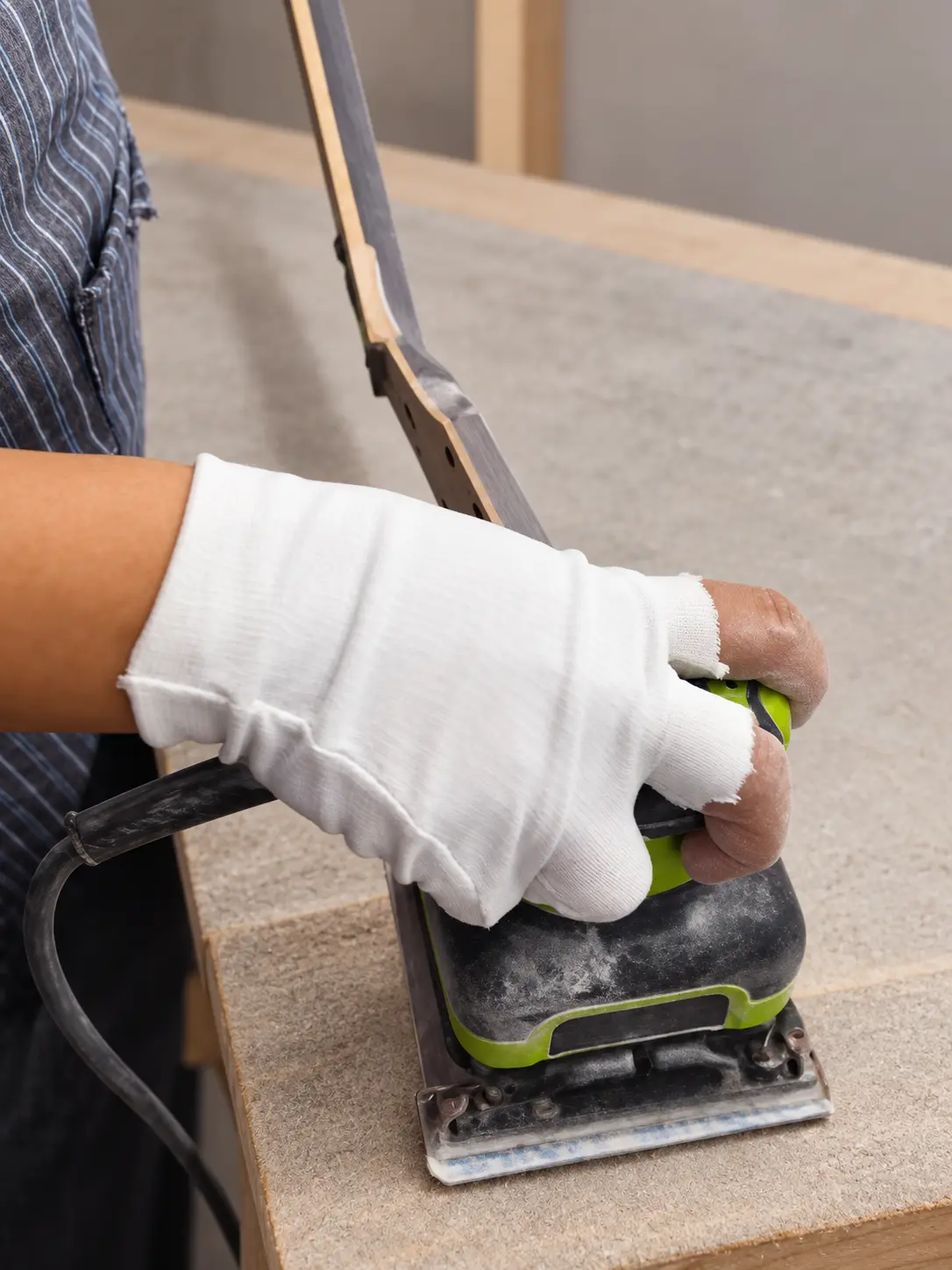
Between the drawing and those small everyday rituals sits the work at the bench. A powered sander supplies the movement; the maker guides its position and contact with the surface. Shaping and surface preparation ask for attention to the piece in front of you, especially where a broad face gives way to a narrow edge.
The pleasure of this stage is in bringing those requirements together. The outline has to carry the design, the hardware needs its place, and the surface must be prepared for the finishing work ahead. Each detail occupies only a small area, yet each contributes to how complete the guitar will feel.
Eventually, most of that preparation will be easy to overlook. A player will simply reach up, turn a tuner and begin. We like the thought that the care is already there, quietly waiting in the familiar movement of a hand.