




Why Jupiter Has a Side Soundport
Sometimes a familiar instrument offers a new way to listen. Jupiter’s side soundport brings its opening closer to the player, while leaving the figured top free to tell its own visual story.
The Jupiter journal · 05 / 12
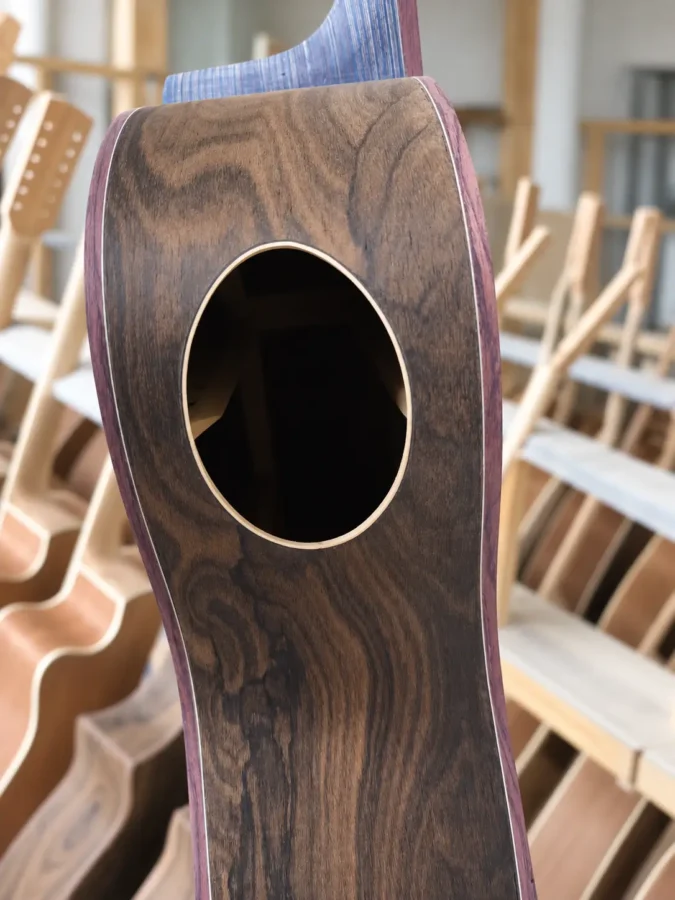
Imagine a quiet room and a chord allowed to ring until the last note fades. The guitar rests against you, close enough to feel its shape as well as hear it. On Jupiter, the soundport sits in the upper side of the body, turned towards the person playing.
The intention is to bring the opening into the player’s listening space. It is a thoughtful part of the experience of sitting with the instrument, hearing a phrase develop and deciding where to take it next. Every room and playing touch will still have its own influence; the design simply offers this closer point of connection.
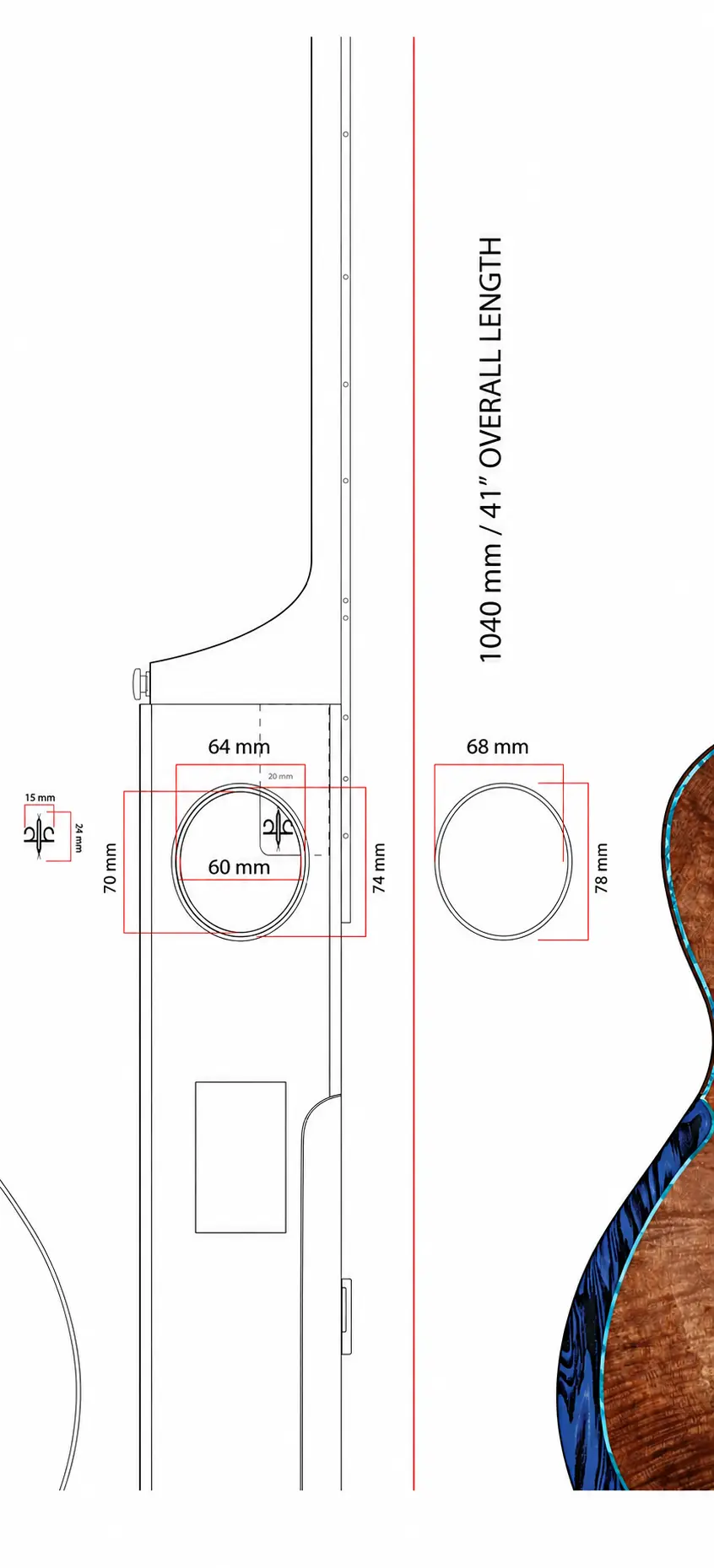
A place for the player to listen
Moving the opening to the side also changes the view from the front. Across the top, the mahogany’s figure can travel through a broad, uninterrupted space. The eye follows the timber, the bridge and the long decorated fingerboard, while the soundport waits around the curve of the body.
Even its surround received its own consideration. During Jupiter’s development, the decorative ring changed from a shell treatment to figured maple. The lighter wood gives the dark side a clear frame, bringing another small contrast into the instrument’s palette.
Look into that frame and there is more to discover: the interior structure and, tucked farther inside, the Jupiter mark. The opening has become part of how the guitar is heard, held and explored. It invites a slower acquaintance, one in which the player’s view matters just as much as the view from across the room.