




A new path for the dove
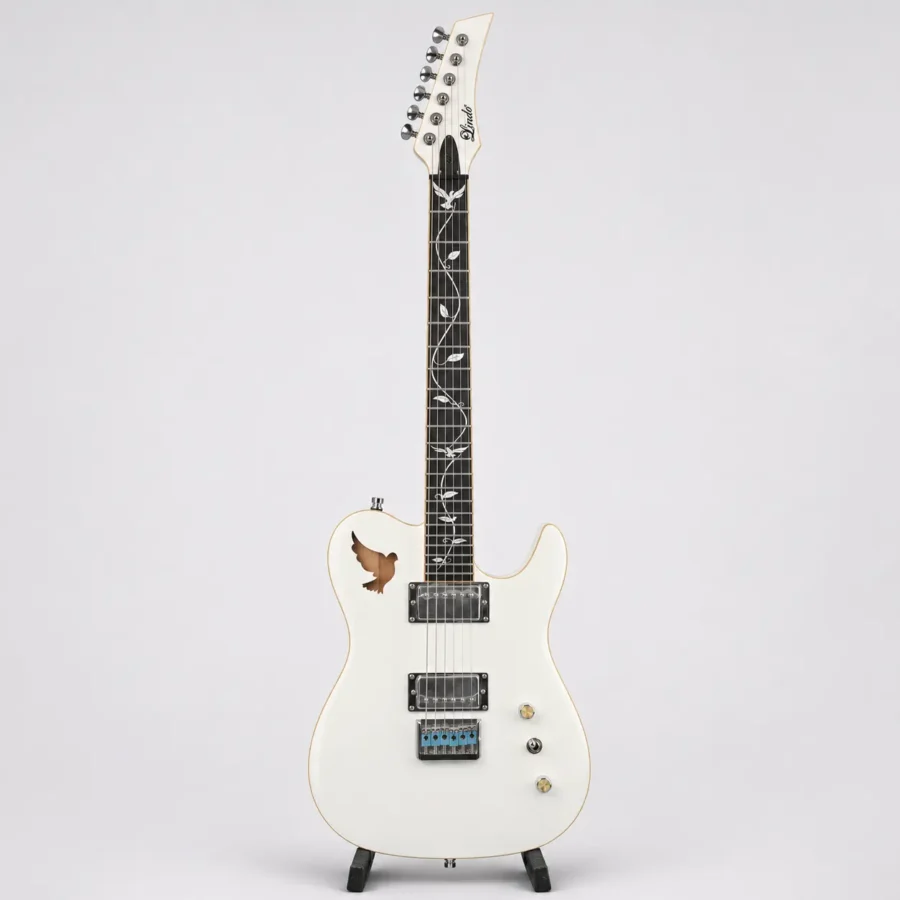
The first fingerboard carried a small flock of separate birds. In the revised White Dove Electric design, a flowing vine gives the dove a new setting along the neck.
The White Dove Electric journal · 01 / 6
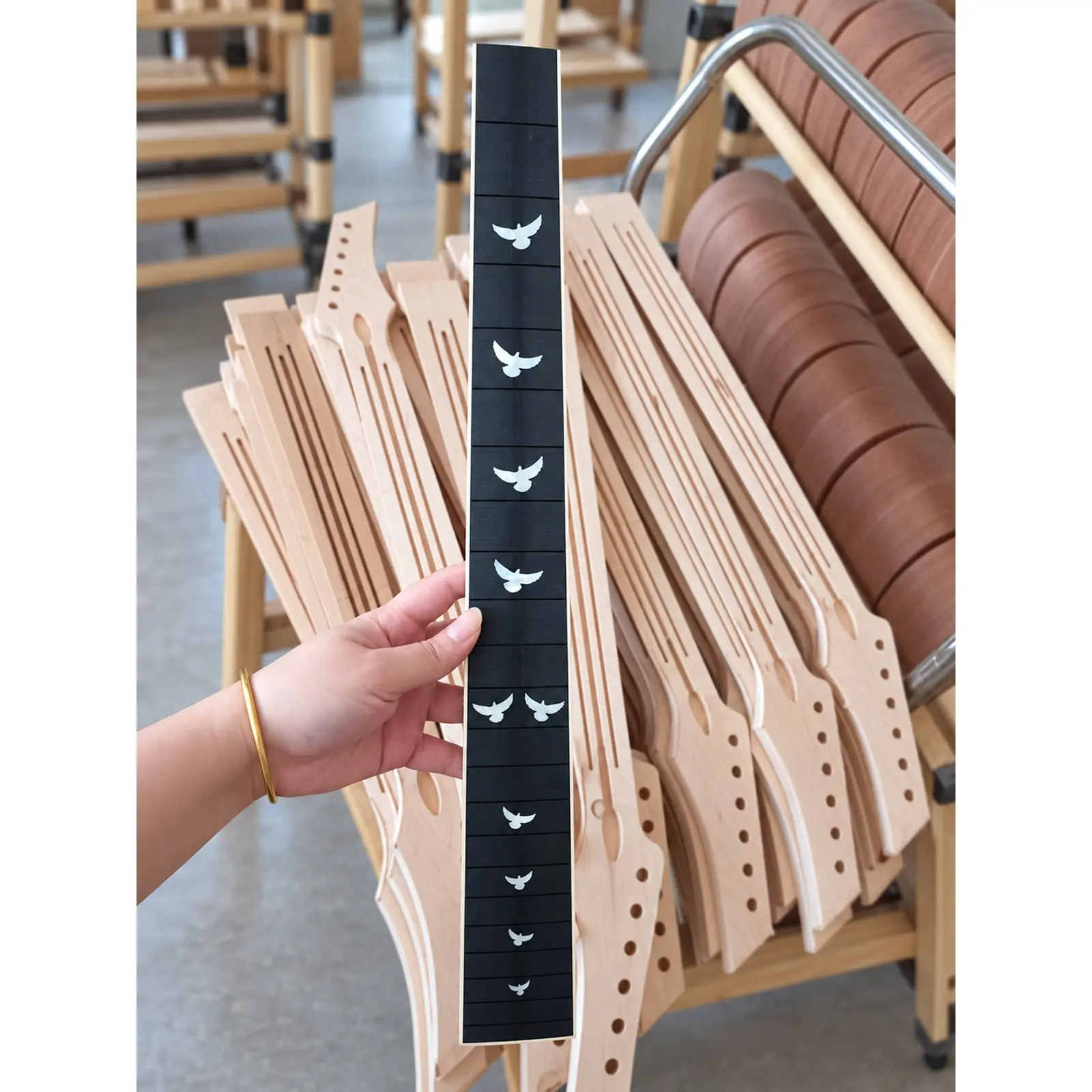
Before the strings are there, a fingerboard has a quiet clarity of its own. On the early White Dove Electric board, pale birds sit against the black surface. There is a pair where the octave will be, and smaller birds farther along. Each has a little space around it, as though the flock has paused between movements.
That workshop photograph records the original idea. The later drawing takes the motif in a new direction. A slender vine winds along the board, turning between leaves and opening into a dove near the nut. Farther down, another bird gives the eye a place to return to. The separate markers have become parts of one flowing design.

A line that travels with the hand
A fingerboard is a narrow place to compose a picture. Its width changes along the neck, and the frets divide it into spaces of different lengths. In the revised layout, the vine bends through those spaces while the leaves and birds give the eye recognisable landmarks.
On the finished model, the design is in mother-of-pearl. Its pale colour is clear against the black composite board, with small changes in lustre as the light moves. The figured maple binding makes a warm edge around the whole arrangement.
While playing, you encounter that drawing a little at a time. A chord keeps the hand near one leaf. A melody carries it towards another. The fretwork and strings become part of the view, and the inlay gradually becomes familiar through use.
Look back at the early board and the family resemblance is still there. The bird has kept its place in the White Dove story. Around it, the new vine has given the eye a longer path to follow.