




Where the strings find their way
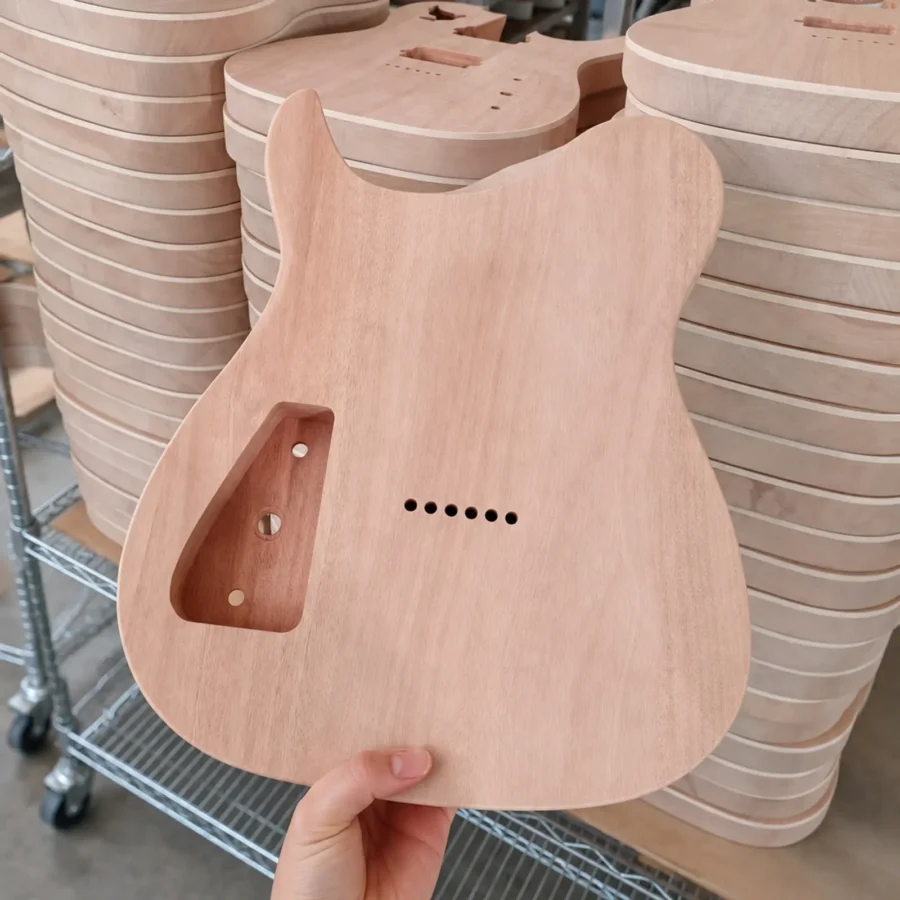
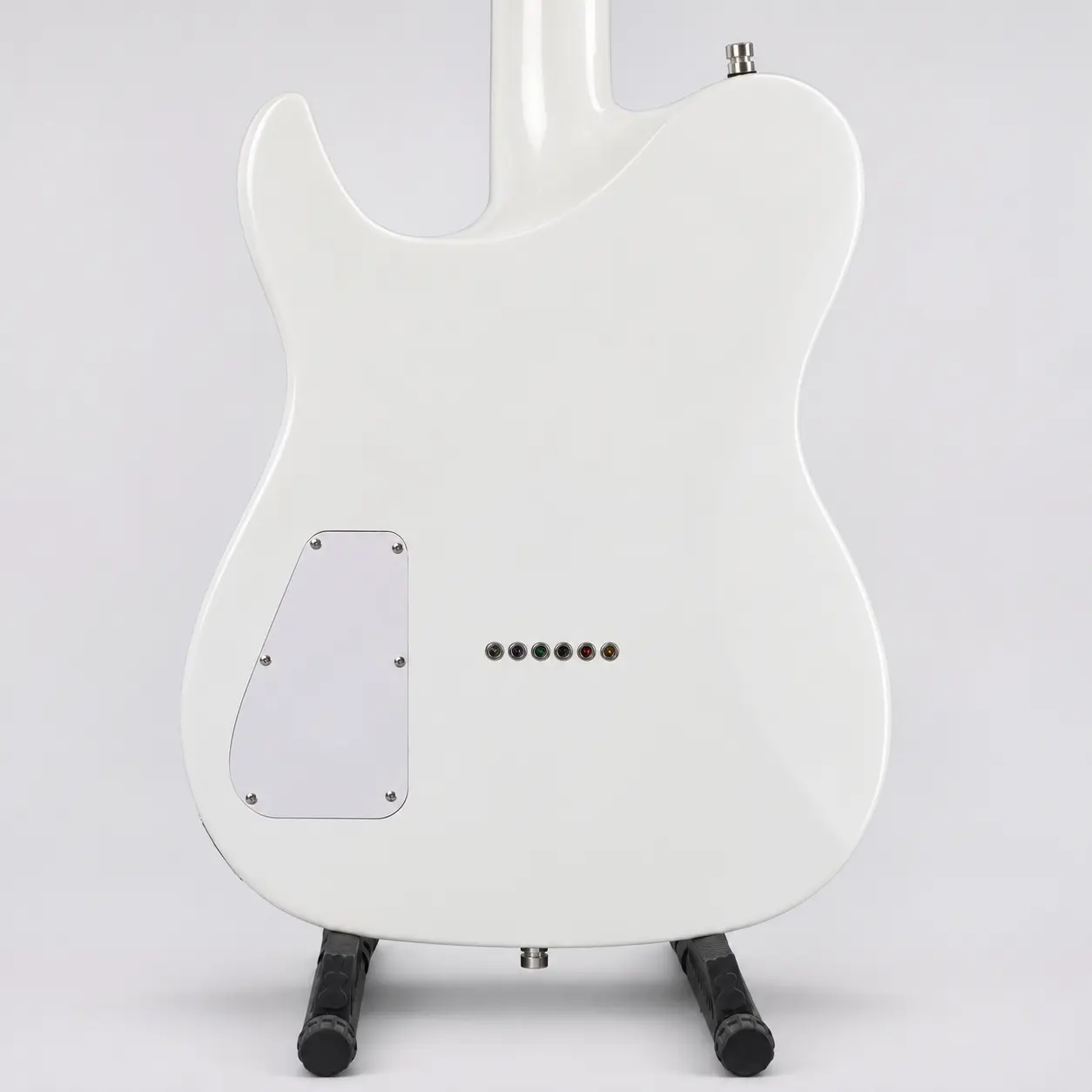
Six small holes in an unfinished body mark the beginning of the White Dove Electric’s string path. On the completed instrument, recessed ferrules and a fixed bridge bring that route into view.
The White Dove Electric journal · 06 / 6
Turn the unfinished body over and a neat row of six holes comes into view. Nearby is the larger recess that will hold the controls. Without the covers or hardware, the back offers a simple picture of the spaces prepared for parts that will soon have jobs to do.
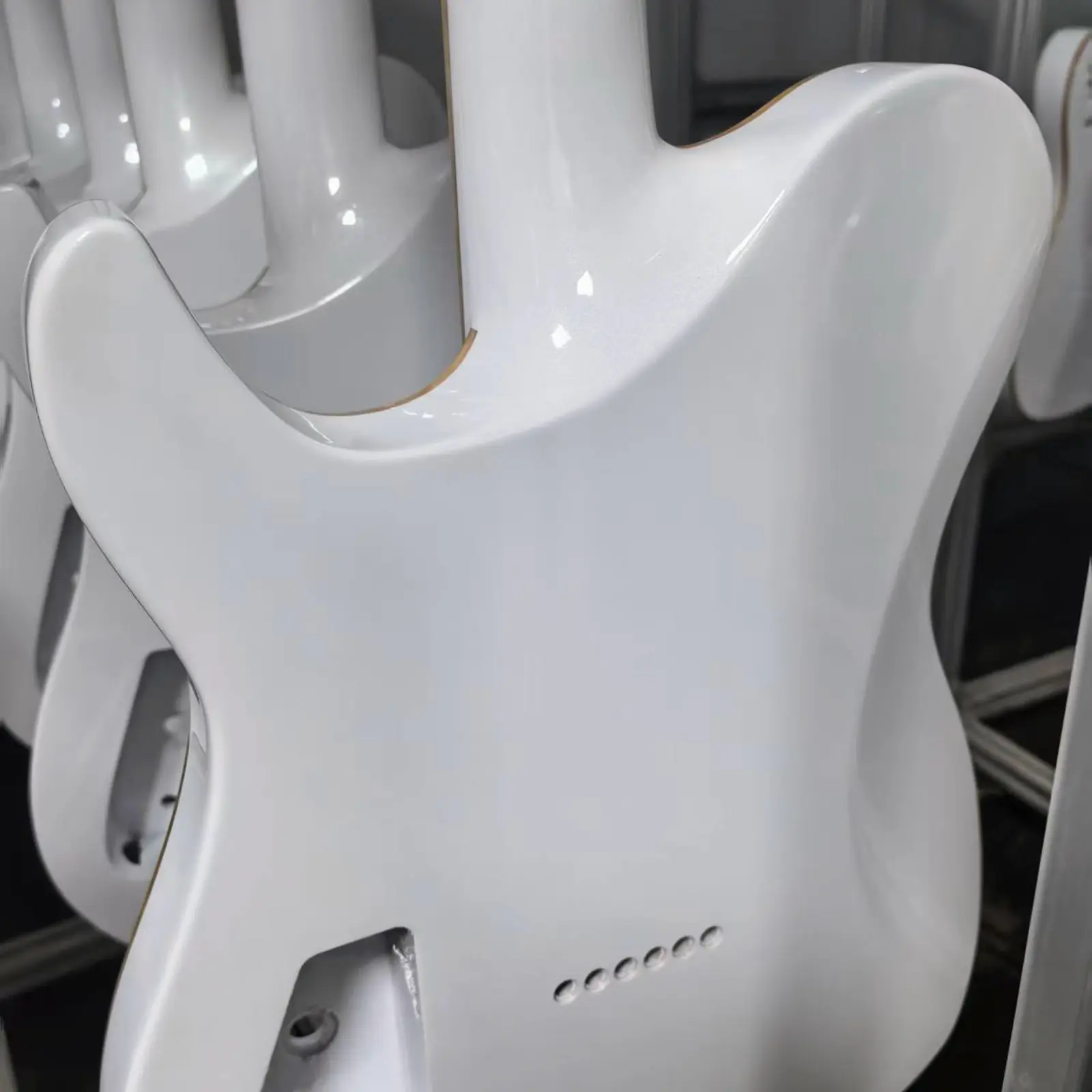
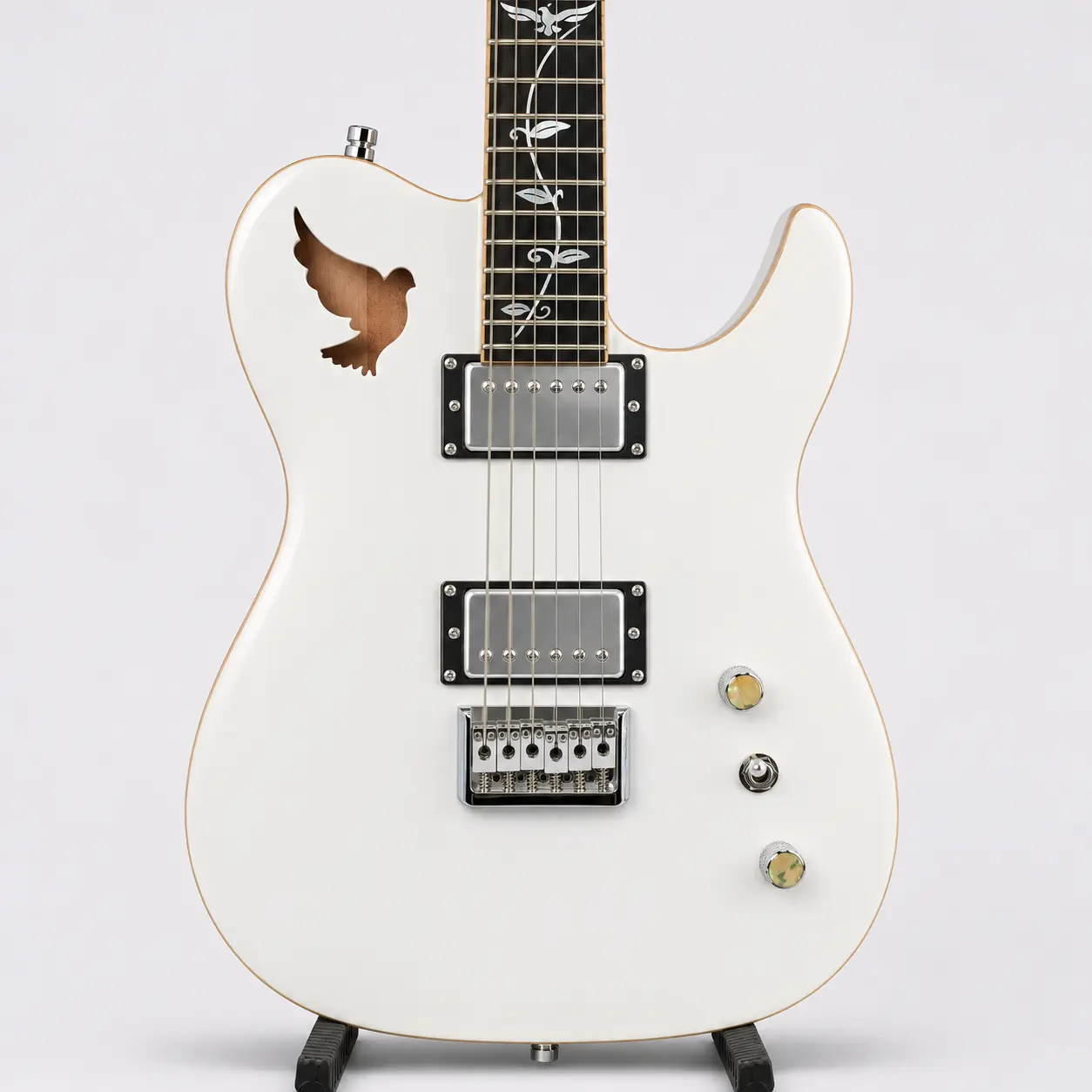
The six holes are part of the string-through-body arrangement. On the finished White Dove Electric, recessed chrome ferrules receive the ball ends at the rear. From there, the strings pass through the body and reach the fixed hardtail bridge on the front.
A path prepared before assembly
Across the bridge, each string has its own saddle. A technician can adjust saddle height to help establish the action, and its position along the string to set intonation. These adjustments belong together with the nut, neck relief and the strings chosen for the instrument.
There is something satisfying about comparing the two stages. The white-finished workshop body still shows a row of empty openings. On the completed rear view, small pieces of chrome sit in those places, while the control recess has its cover fitted.
During a string change, the route becomes familiar to the owner too. The new string is fed from the back, brought across its saddle and taken along the neck to the tuner. A practical part of looking after the guitar follows the path planned into the body before the finish.
Once the guitar is tuned, those six small openings are mostly out of sight. At the front, the strings lie ready above the pickups. The work beneath them has brought each one to the place where the next note can begin.