




The Quiet Craft on the Back of AfterLife
The back of a guitar spends much of its life close to the player. AfterLife gives that quieter surface its own attention, with considered contours and a practical route to the electronics inside.
The AfterLife journal · 05 / 8
After a little while with a guitar, its shape becomes familiar in ways that are difficult to describe. You know where the body rests, how it turns as you lift it, and where the neck begins beneath your hand. The surfaces facing the player become part of that quiet acquaintance.
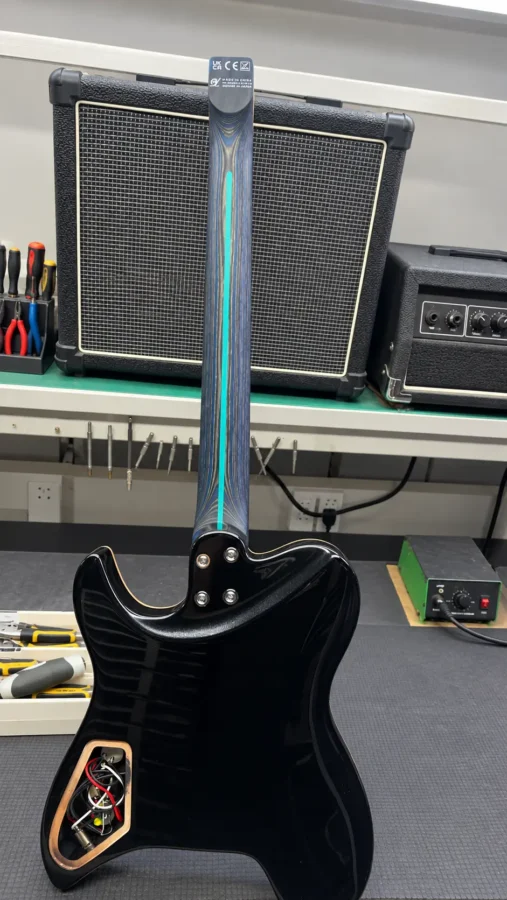
On AfterLife, the back takes shape in sycamore before the metallic black gloss gives it its darker character. Around the waist and towards the neck, the outline changes direction and the surfaces meet. These contours are considered with the player’s contact in mind, giving attention to the side of the instrument that an audience rarely sees.
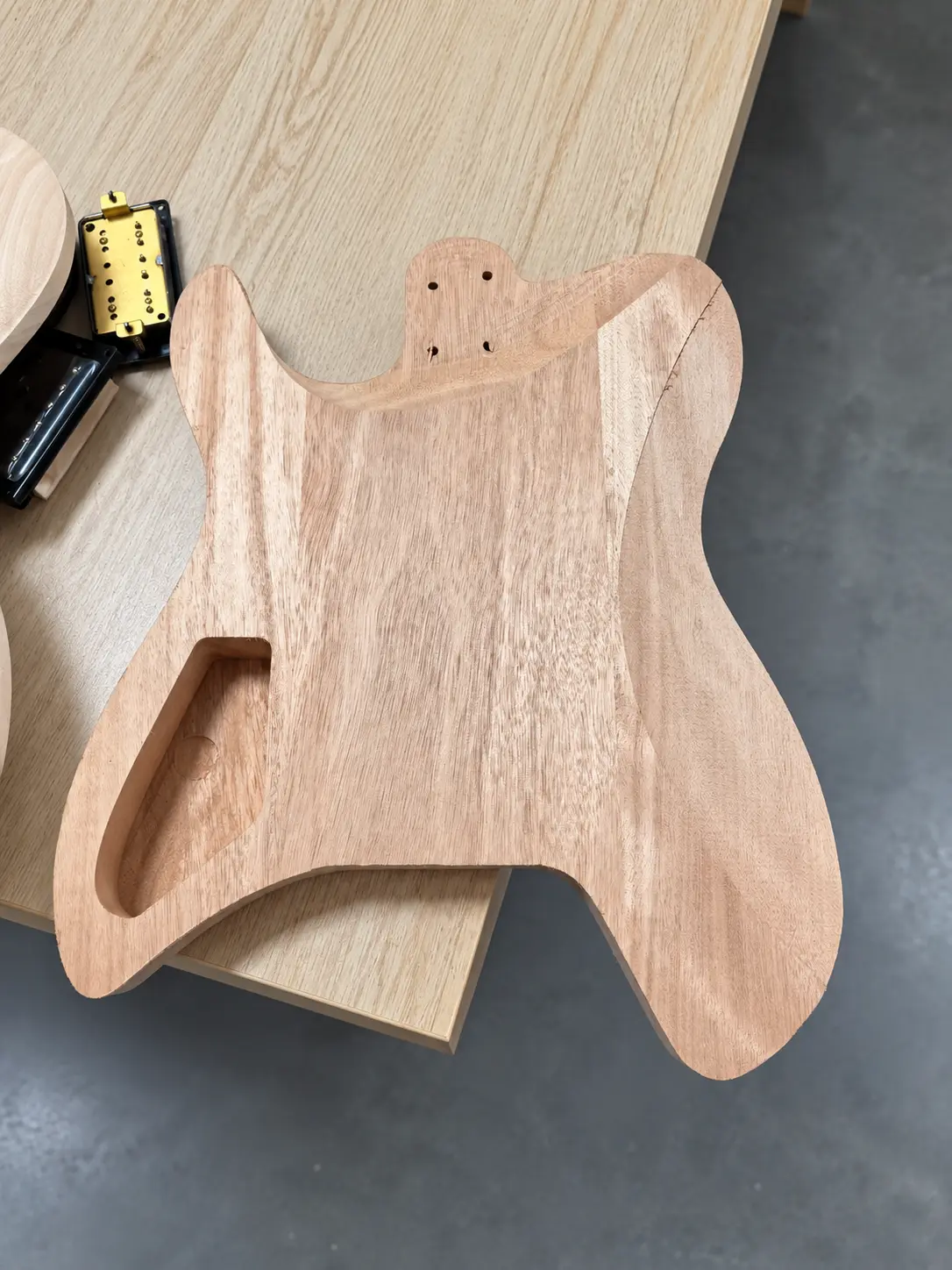
The side of the guitar that stays close
There is also a smaller shape to make room for: the rear electronics cavity. It provides access to the wiring behind the controls, allowing a technician to reach that part of the instrument when servicing is needed. Its position is a practical decision that belongs in the body’s design from an early stage.
The recess and its surrounding edge have their own place within the larger shape. In an assembled guitar, a look inside reveals how closely the exterior controls and interior connections belong together. The semi-chambered body, the neck connection and this service opening each have a different job within the same instrument.
Once the dark finish reaches the curves, light traces them in a different way. The coloured stripe along the neck leads towards the heel, then the broad back takes over. Turn AfterLife towards you and there is a whole other part of its character to discover: practical, carefully considered, and close to the person who will play it.