




Where AfterLife’s Natural Top Meets the Dark
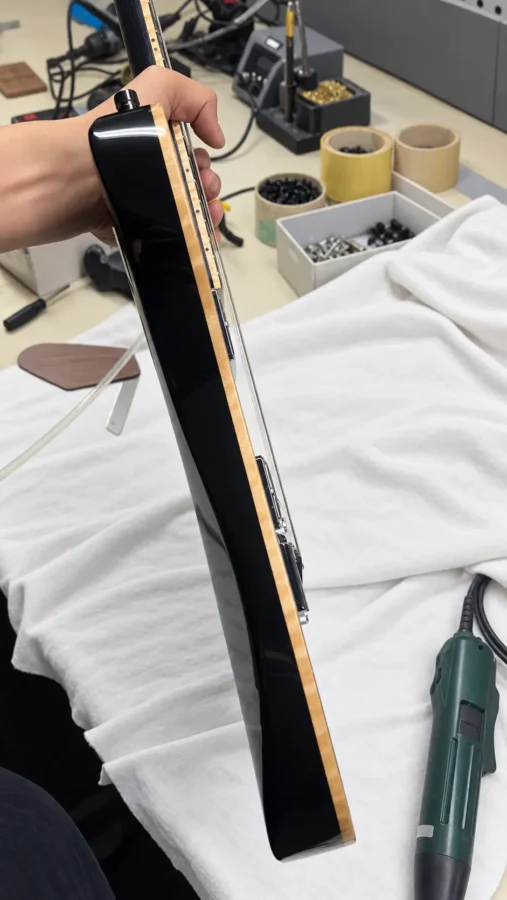
Turn the AfterLife slightly and its character changes. The figured top gives way to a dark, glossy side, with a fine line of flame maple keeping the meeting clear.
The AfterLife journal · 06 / 8
There is a particular pleasure in turning a guitar over slowly. The front has already made its impression, but the side tells you how that first view belongs to the rest of the instrument. On the AfterLife, warmth meets darkness along a slender, carefully defined edge.
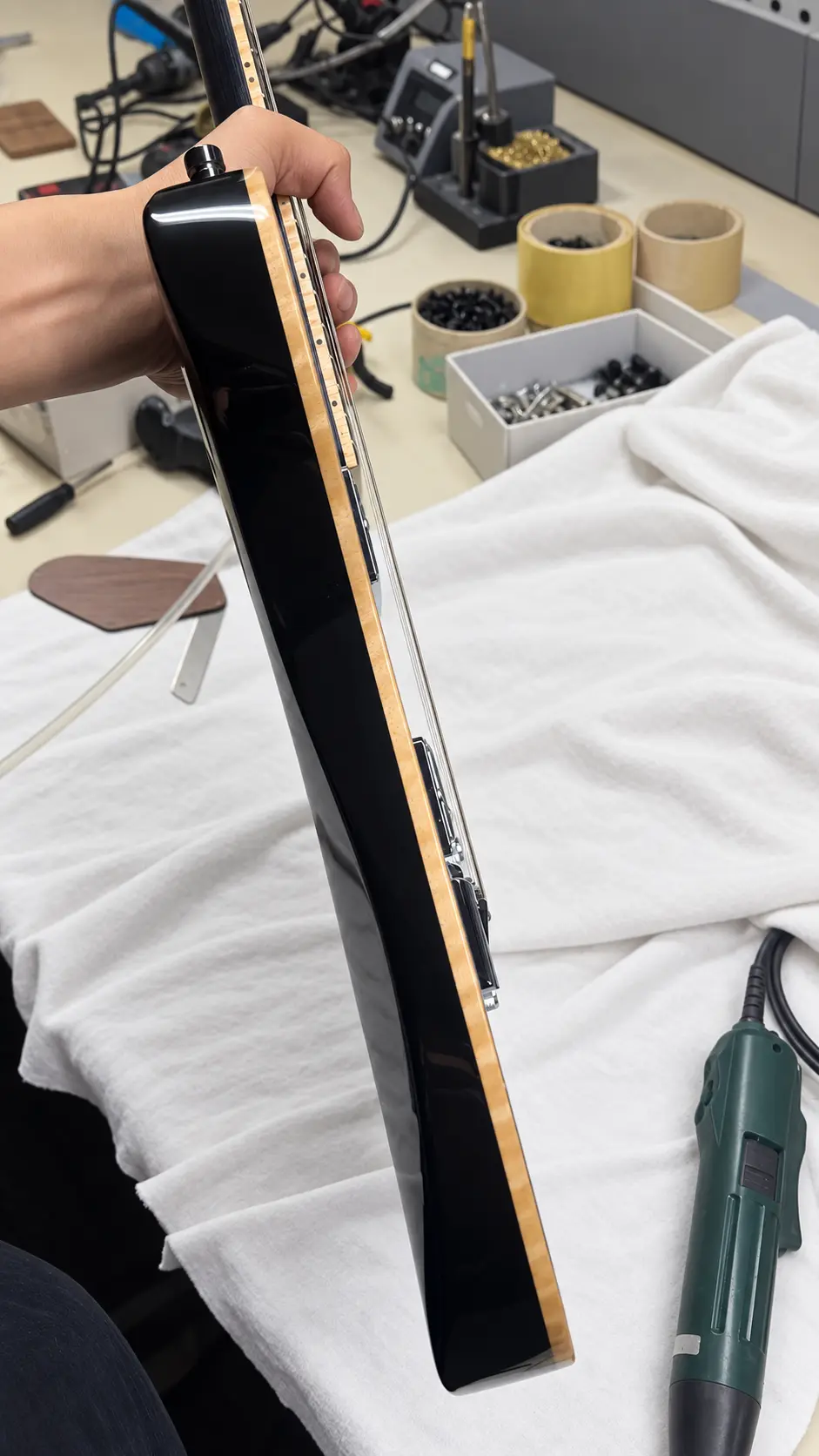
The Japanese tamo ash top carries its natural figure above a metallic black sycamore body. Between them runs flame maple binding. This lighter wood follows the outline, giving the eye a continuous path around the curves and drawing attention to the change from one surface to another.
A small edge with a place in the whole
An edge like this asks several parts of the design to agree. The binding has to belong to the body’s changing shape; the natural top needs a clear boundary; the dark side needs to meet it without swallowing that fine line. Much of the visual balance rests in this narrow space.
The gloss has its own part to play. It lets light move over the darker surface and gives the wood a protective finish for ordinary handling. Reflections make the body’s shape easier to follow, while the brighter maple keeps the outline visible as the guitar turns.
For the player, these are details encountered through familiar movements: lifting the instrument from its case, settling it against the body, or resting a hand near the rim between songs. The front, edge and back become different parts of the same object, known gradually through use.
That is the quiet attraction of this contrast. The AfterLife can look bold from across a room, yet a closer acquaintance has room for something finer: a pale wooden line, a dark reflection, and the care of bringing the two together.