




When the grain comes to life
An unfinished Earth body already carries its pattern in the wood. As the surfaces take on their finished appearance, those pale lines become part of an instrument with a warm, individual presence.
The Earth V2 journal · 01 / 8
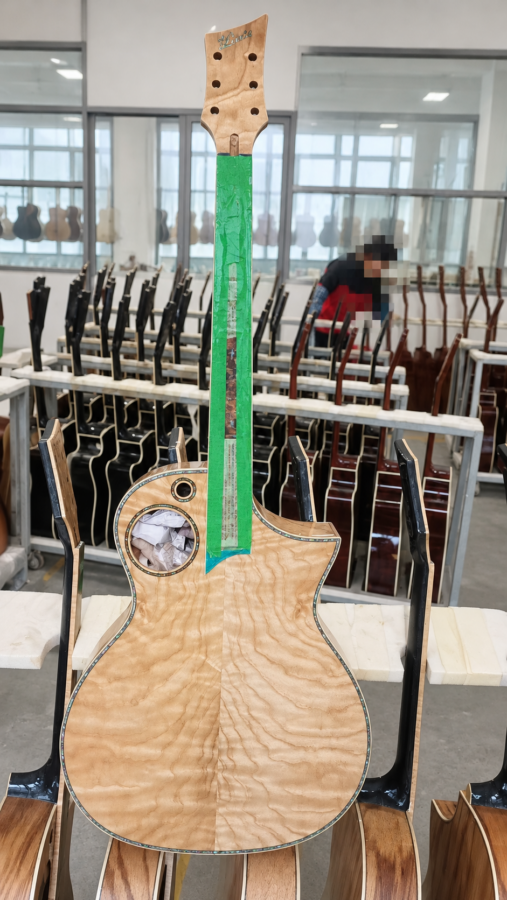
An unfinished guitar body leaves a great deal exposed. Without the bridge or strings, your eye can travel across the whole face, following the grain into the waist and towards the shoulder. The Earth’s outline is already there, while the wood offers a quieter first impression of what the instrument will become.
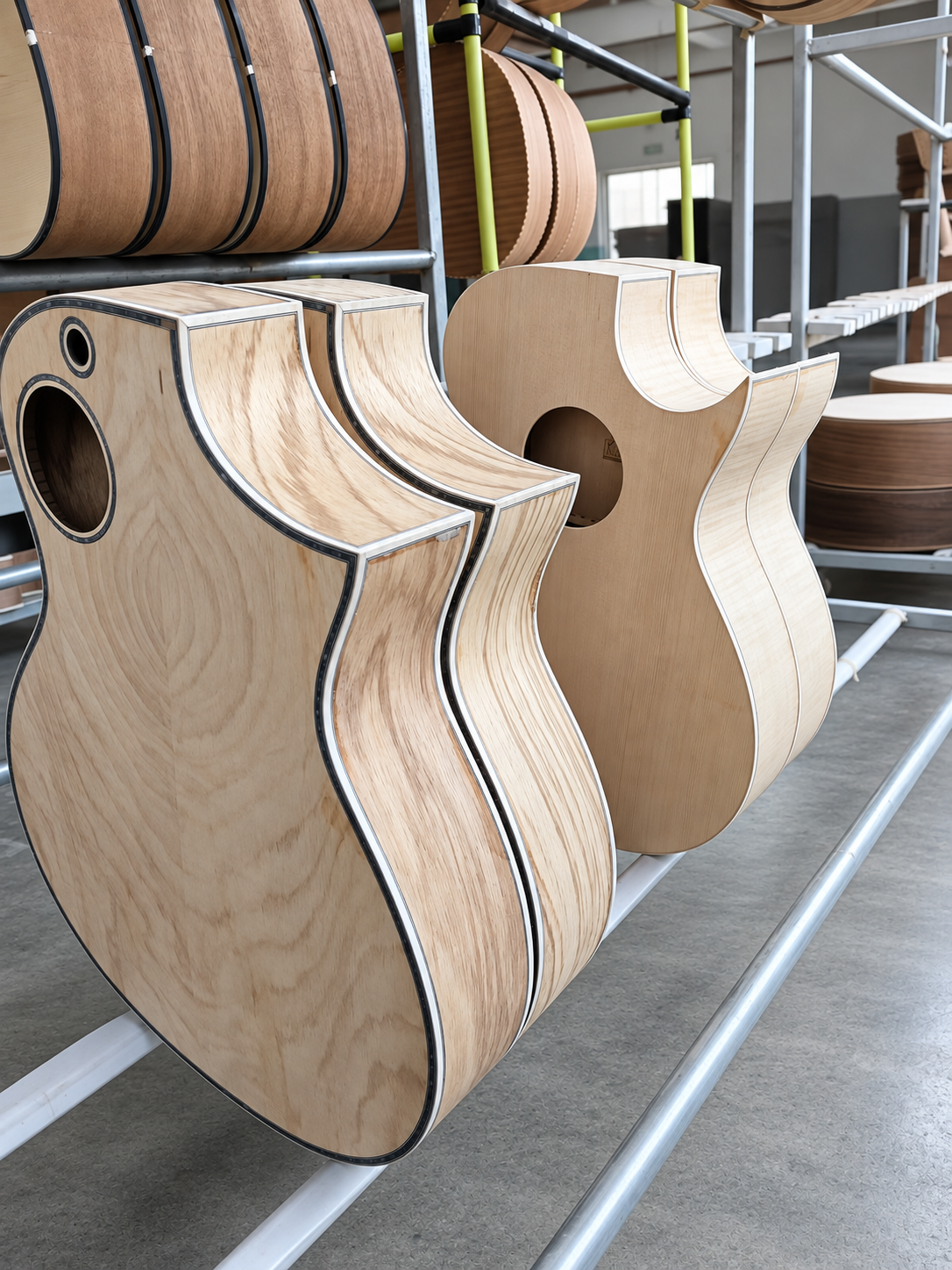
Across the Japanese Tamo ash, the figure gathers into ripples and spreading lines. There is no single repeated motif to follow. Some areas are closely patterned; others leave a little more space. These variations give each body its own starting point, before the smaller fittings begin to claim their places.
The character already in the wood
The finish brings another element into that encounter: reflection. On a glossy surface, light moves across the curves as you lift or turn the guitar. The figure remains beneath it, sometimes sharply visible and sometimes softer behind a highlight. A familiar patch of grain can appear different with a small change of angle.
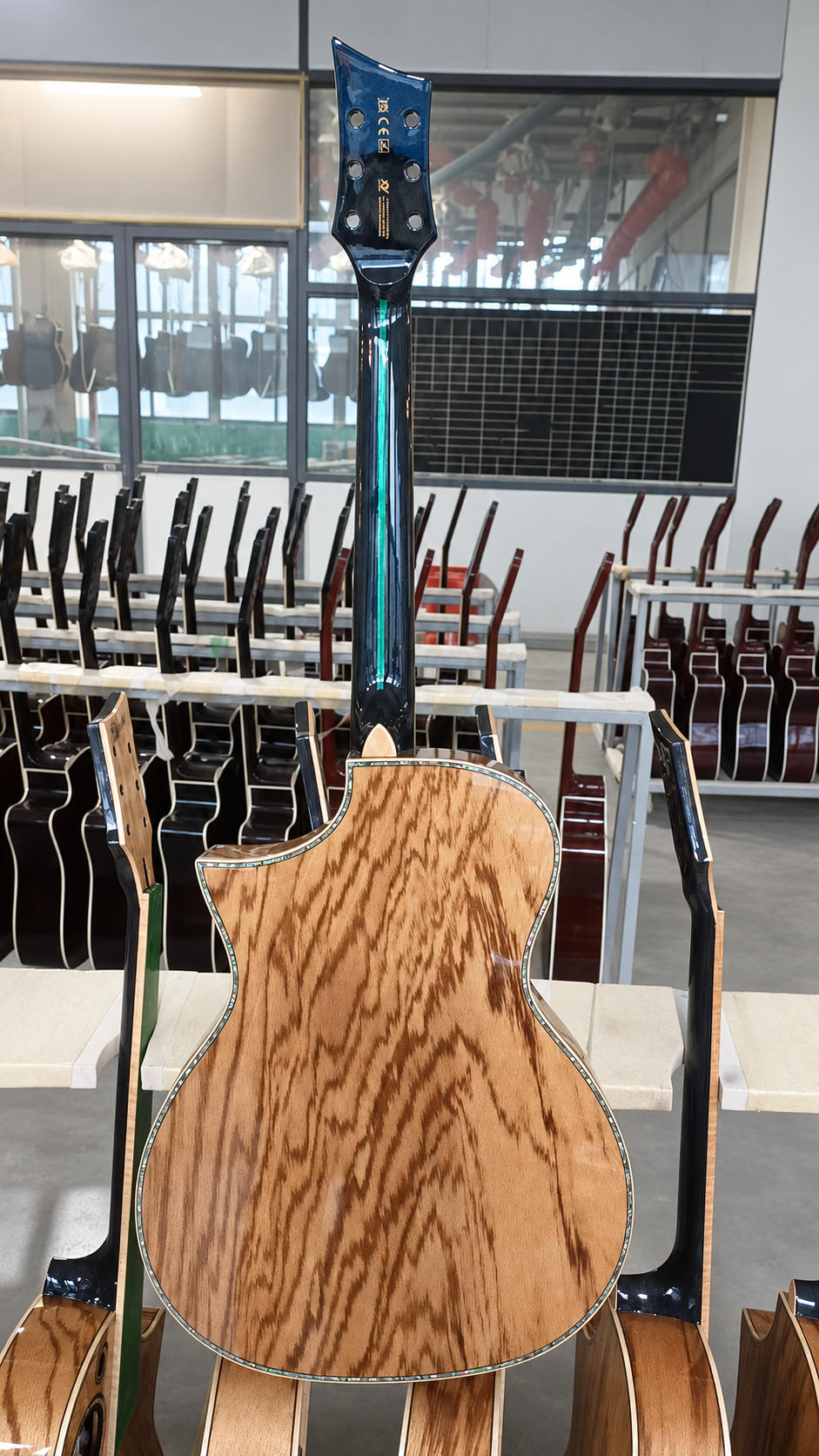
On the reverse, the Zebrano’s darker streaks stretch across the back and around the sides. Their direction makes the shaping of the body easier to follow. Near the waist and cutaway, the lines of the timber meet the curves that have turned separate surfaces into a guitar you can hold.
Maple binding gives those meeting places a pale outline, with abalone adding a finer border of changing colour. Both remain visible through the later stages of assembly. They frame the grain as the neck, bridge and hardware take their places around it, keeping the natural pattern central to the finished appearance.
The completed surface still lets the first lines of the wood lead the eye. Around them, the bridge, binding and strings bring the instrument into focus. A pale unfinished body has become something you can hold close, with its natural figure still at the heart of its appearance.