




Before the Strings: AfterLife Takes Shape
Long before the first chord, a guitar begins to make room for the things it will become. For AfterLife, the early body work brings its outline, inner spaces and future playing layout together.
The AfterLife journal · 01 / 8
When you settle down with a finished guitar, its parts seem to belong together naturally. The pickups sit beneath the strings, the neck leads your hand towards the body, and the bridge waits at the other end. That familiar arrangement begins with decisions made while the wood is still open and unfinished.
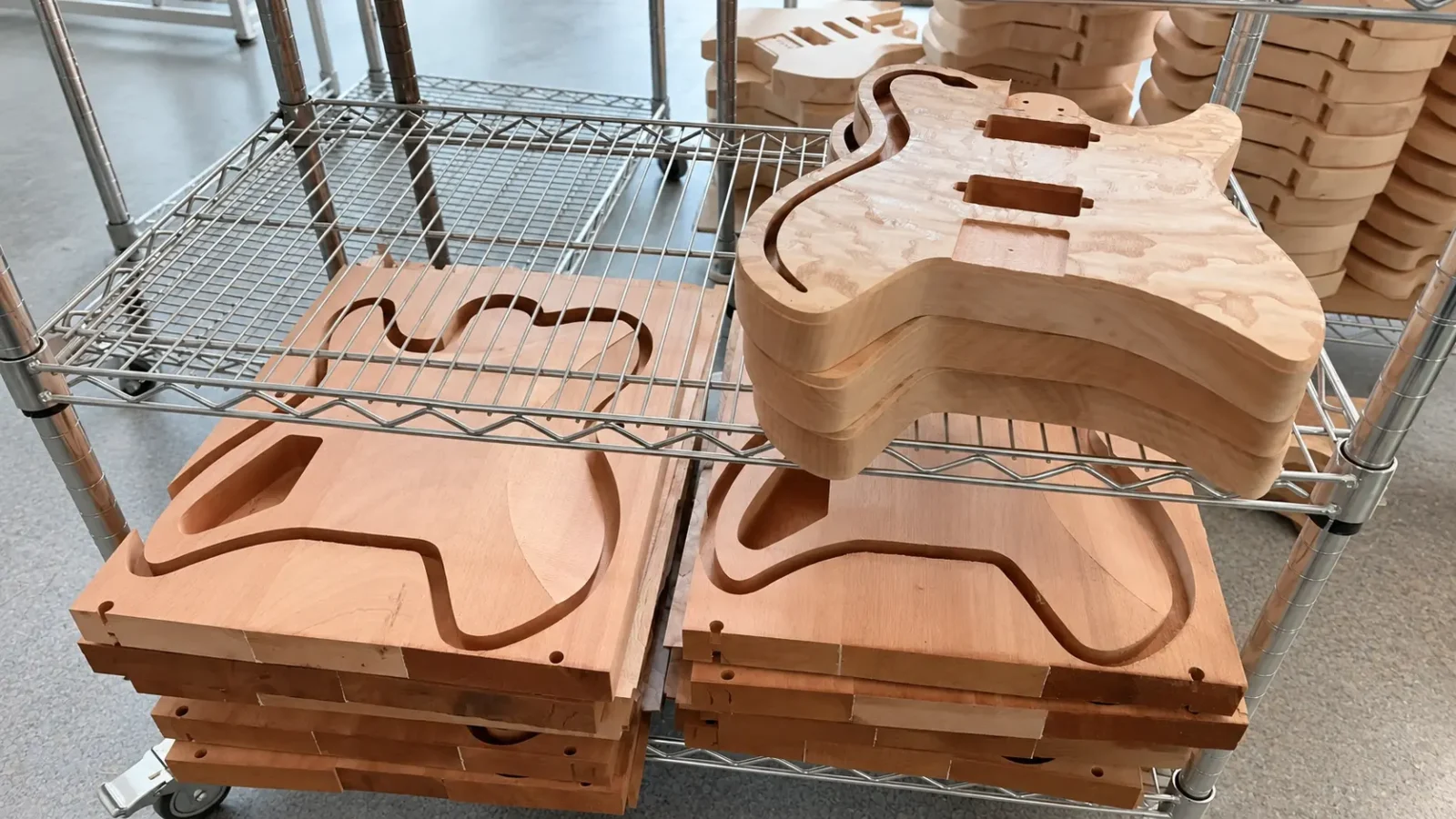
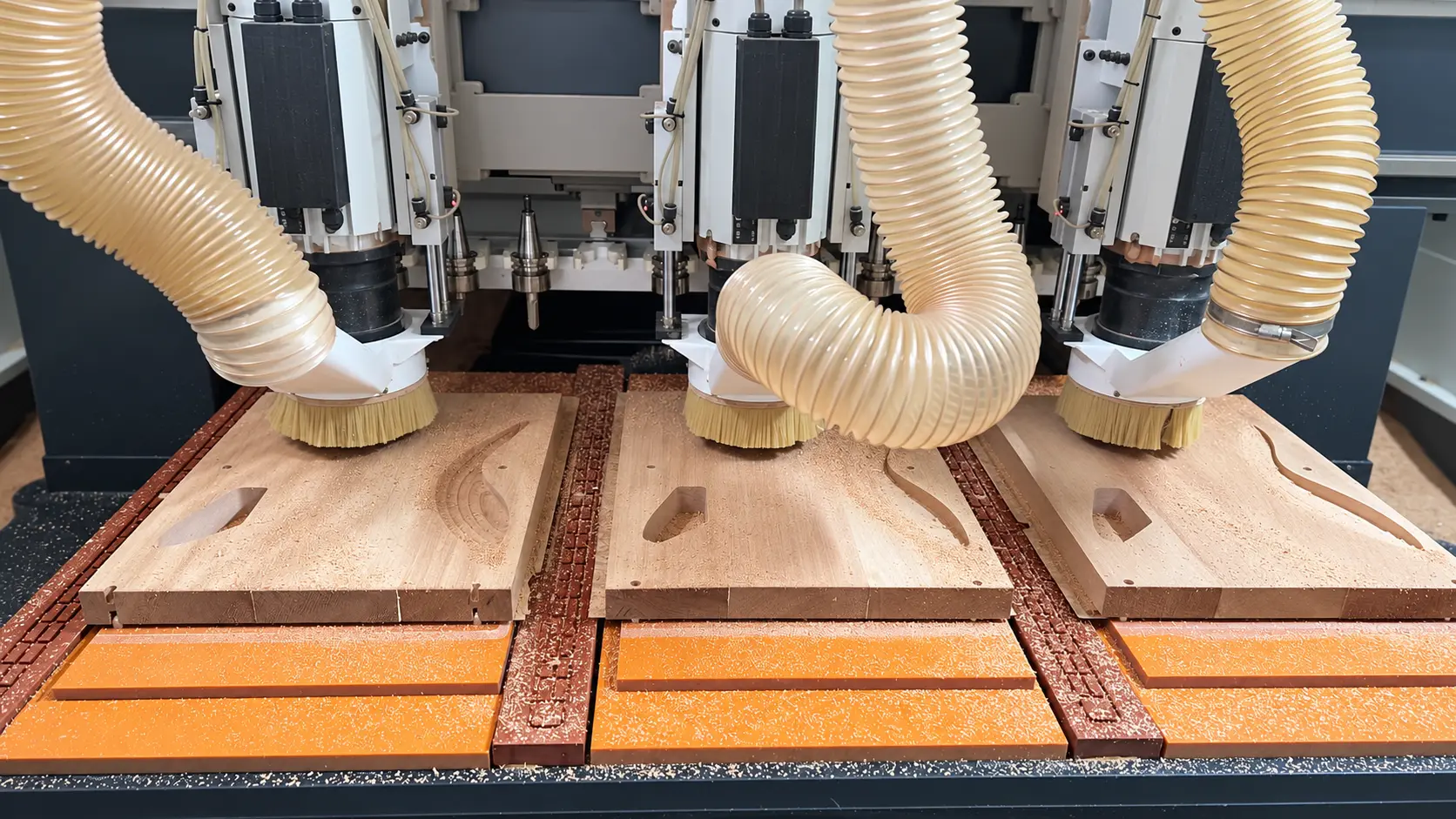
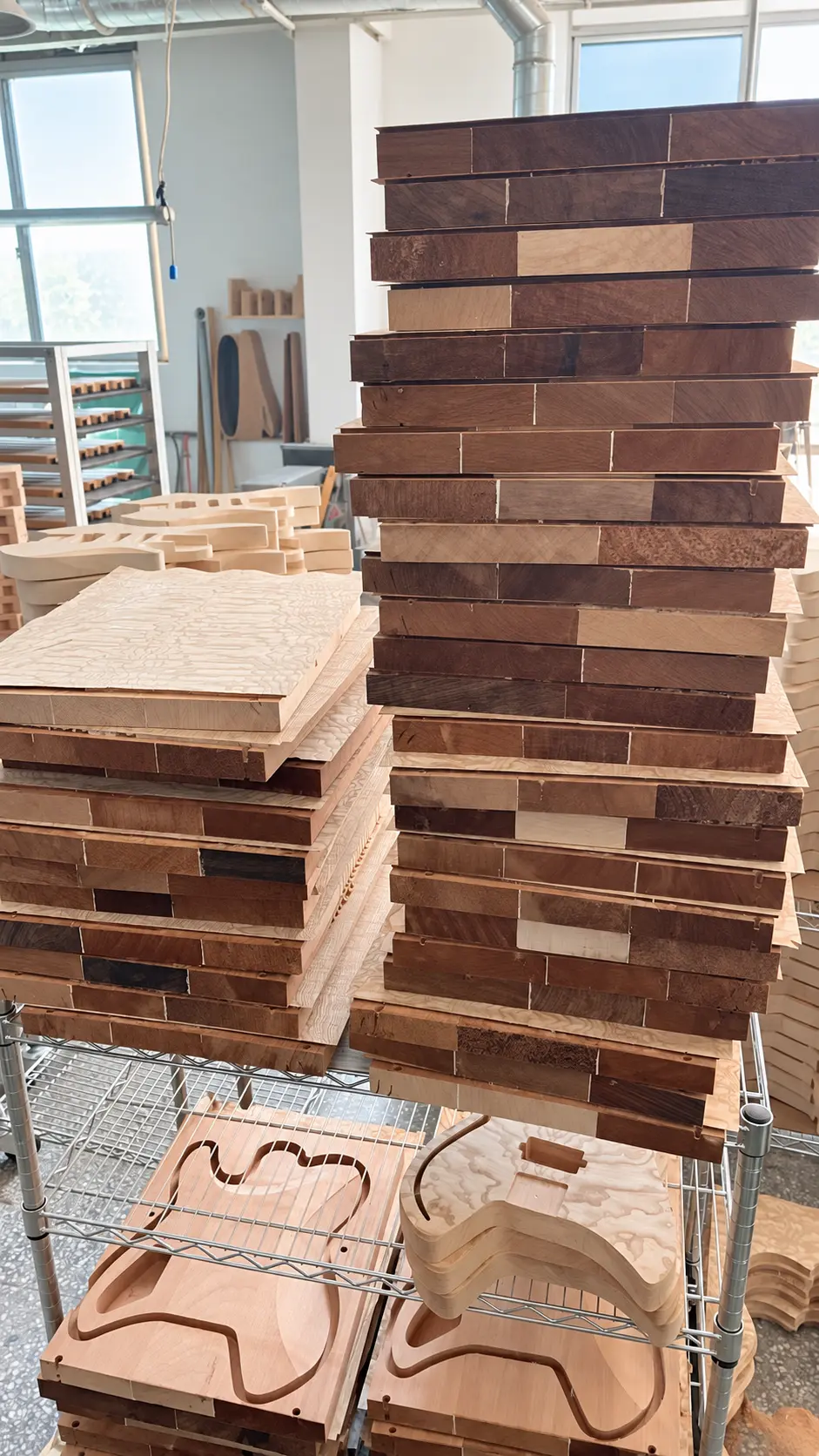
In the workshop, flat panels sit beneath cutting heads and shaped bodies gather on a rack. The change is gradual but unmistakable. Rectangles give way to an outline, and spaces appear where components will eventually sit. Before the bright hardware arrives, the body already carries the beginnings of the instrument’s layout.
Making room for the instrument
Those spaces have practical jobs. The neck needs a place to meet the body; the pickups need room beneath their mounting rings; the bridge area needs to be planned around the path of the strings. Each part belongs to a larger arrangement, and the early shaping establishes how that arrangement will come together.
AfterLife’s semi-chambered construction adds another layer to that planning. Its outer shape encloses areas of wood and open space, with a curved opening giving a glimpse inside. The body has to accommodate the working parts of an electric guitar while carrying the flowing silhouette that makes this design recognisable.
There is something quietly absorbing about this stage. The surfaces are still pale, the cavities uncovered, and the guitar has yet to acquire its dark back and polished fittings. Yet the intention is already there. Later, when the instrument rests against you and your hand reaches for a chord, these early decisions become part of something that feels complete.