




The Moving Grain of AfterLife
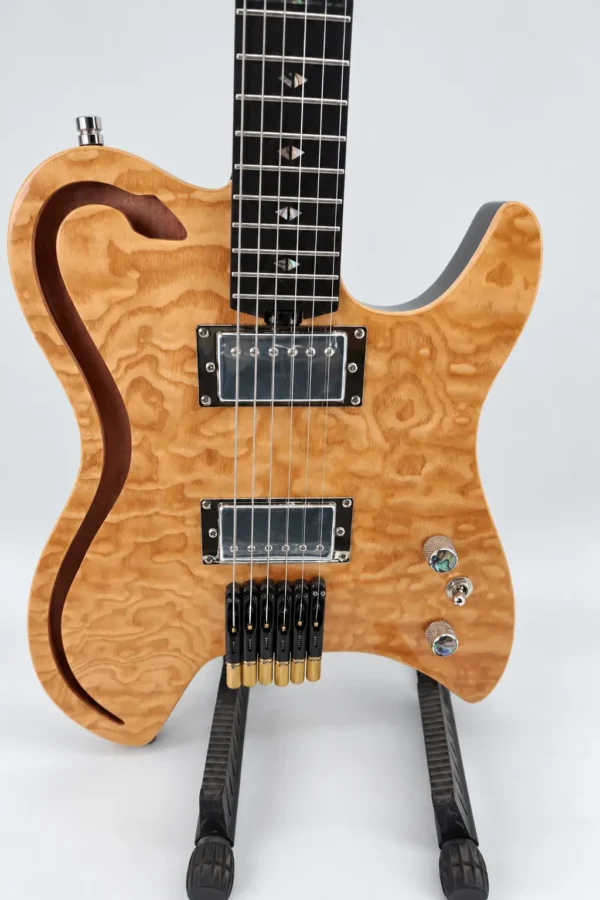
Japanese tamo ash brings a restless pattern to AfterLife’s natural top. Rounded ripples and longer lines move across the body, giving each viewing angle another detail to linger over before you begin to play.
The AfterLife journal · 03 / 8
There are moments when a guitar invites you simply to look. You lift it from the stand, turn it towards the window and notice a small island of grain beside a pickup. A little further across, the pattern gathers into waves. The wood gives the eye plenty of places to wander.
AfterLife uses a Japanese tamo ash drop-top over its sycamore body. The figured top forms the visible front of that construction, bringing its own pattern across the shoulders and around the component spaces. During the build, it already has a strong presence, even while the neck pocket and pickup cavities remain uncovered.
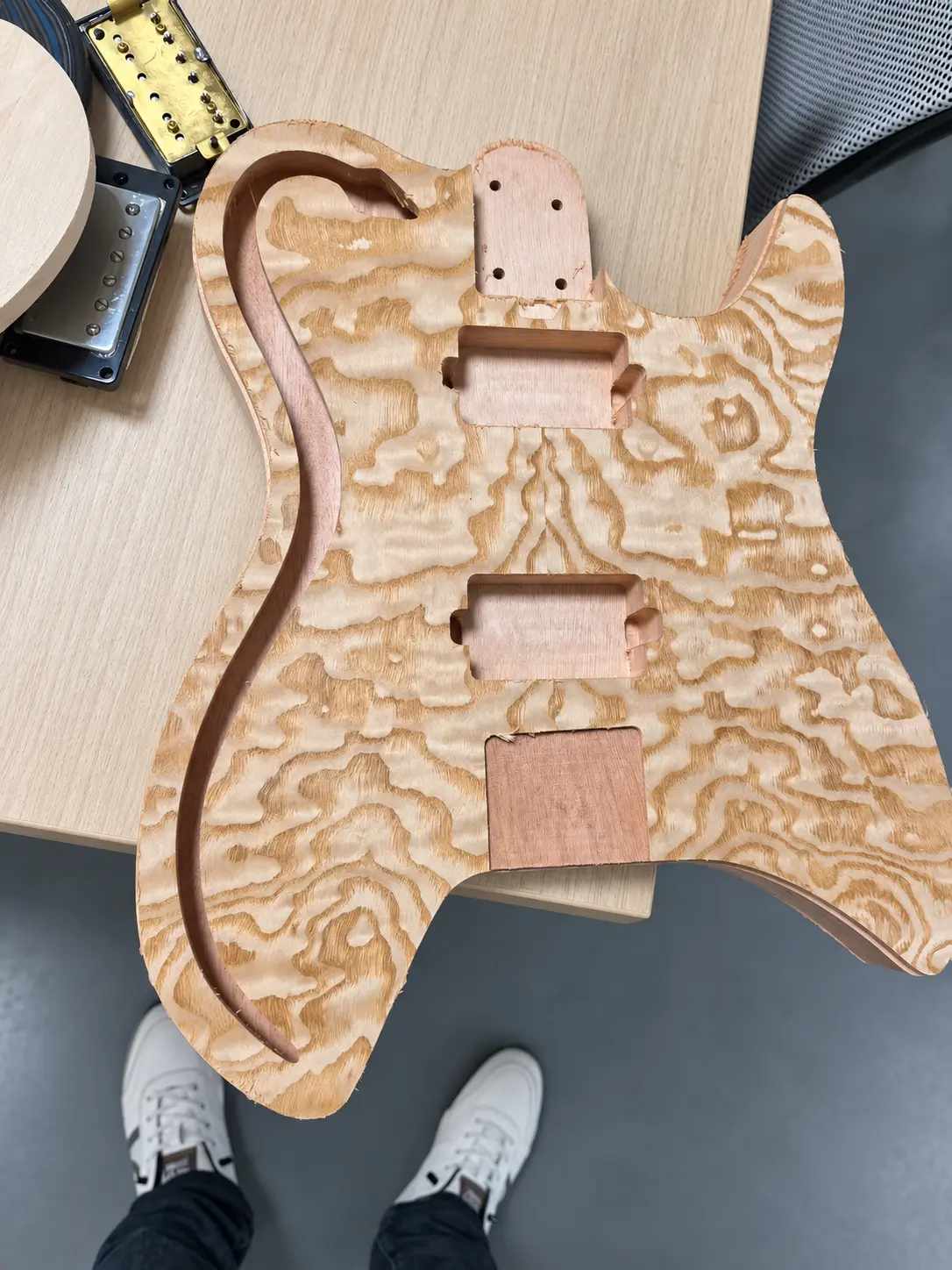
Natural wood, framed in black
As the instrument comes together, those open spaces acquire their fittings and the surface begins to read differently. Chrome reflections, the dark fingerboard and the long snake-shaped opening give the grain a setting. Between them, there is still room to see the broad movement of the wood, with smaller details tucked close to an edge or control.
The natural front is framed by flame maple binding and the metallic black gloss of the body. These changes of material create a clear boundary for the eye to follow. From the front, the grain takes the lead; turn the guitar slightly and the darker side appears, giving the warm top another kind of depth through contrast.
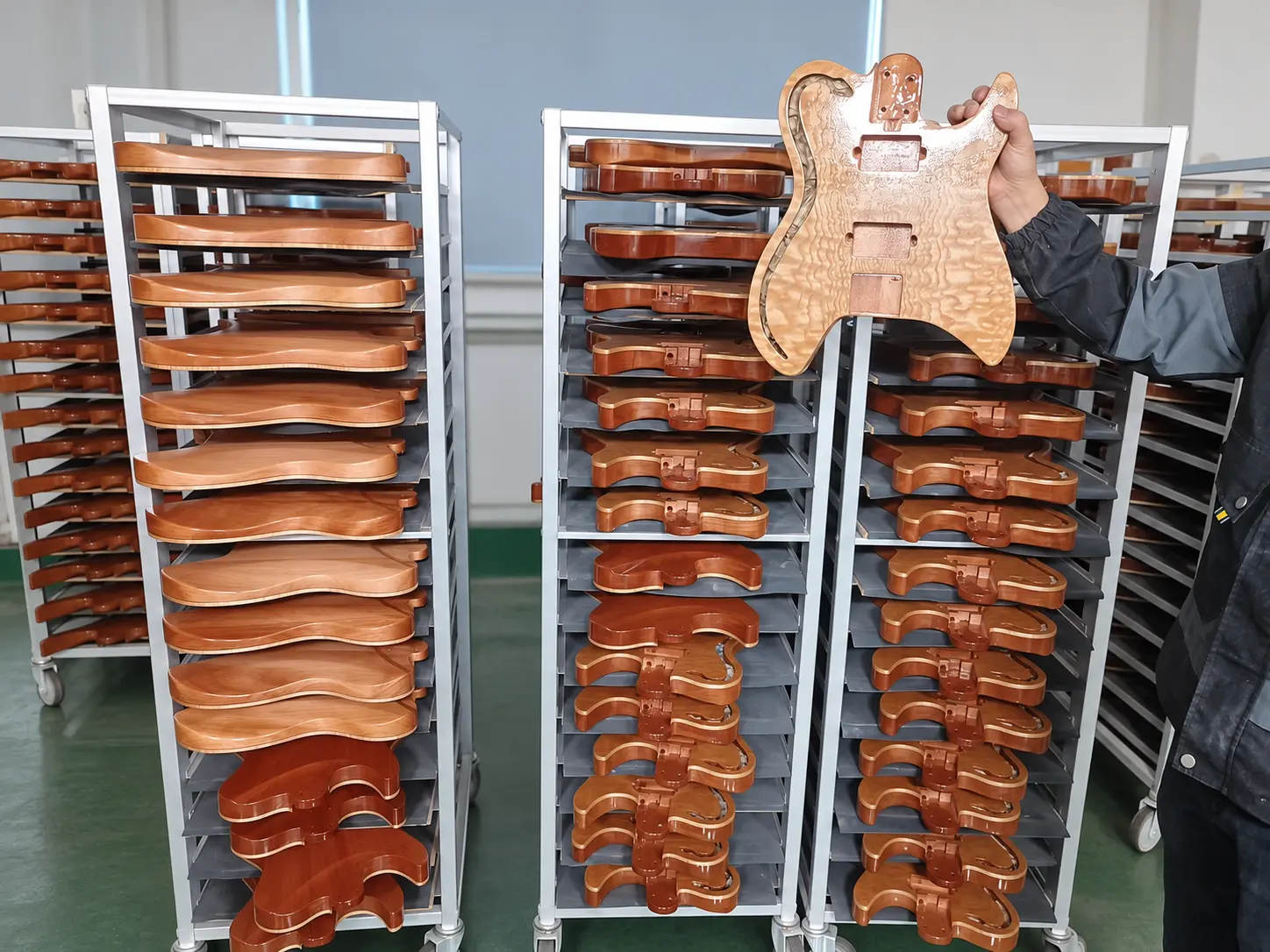
That is part of the pleasure of leaving the timber in view. Natural variation remains within a recognisable design, so the instrument can have a familiar outline and its own small details. Over time, a particular curl or ripple may become as familiar as the first chord you tend to play. It is a gentle kind of character, there whenever you look down.