




Two ways to hear the same note
A note on the Koya can be picked up beneath the saddle or heard inside the soundhole. The prototype’s BS3M lets you decide how much of each approach belongs in the song.
The Koya Acoustic journal · 08 / 8
Play a chord softly enough and you have time to hear how it changes. The first brush of the pick is clear, then the strings settle and the sound hangs for a while. When you plug in, you can choose how that small sequence comes through the speaker. On the Koya prototype, that choice starts with two different ways of picking up the guitar.
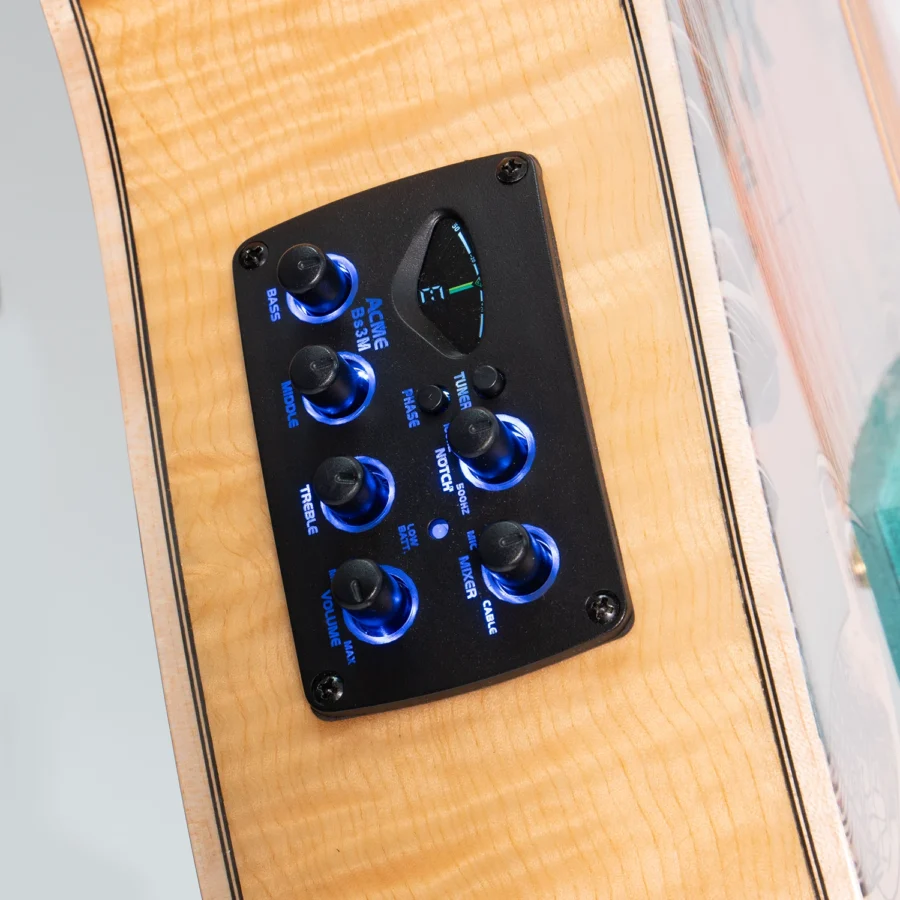
The undersaddle piezo senses vibration at the saddle, close to the point where the strings meet the body. The soundhole microphone listens from inside. With the BS3M blend control, you can begin with the piezo for a more direct signal and add some of the microphone’s sound as you listen. A fingerpicked line might leave room for more of it. A busy arrangement might call for a simpler balance.

Finding a place for the guitar in the mix
The three-band EQ gives you a way to shape the result once the room and the other instruments have a say. A change to the bass, middle or treble can help the guitar sit more comfortably alongside a voice. The controls are within reach on the side, so a small adjustment can happen between passages.
There are practical details here as well. The on-board tuner is close to hand. The phase control and notch filter offer ways to respond if the guitar starts to feed back when amplified. Their usefulness depends on the room, the monitor position and how loudly the instrument is being played.
Once the balance is right for the song, there is little reason to look at the controls again. Your hand comes back to the strings, the first chord goes out into the room, and you can listen to what the next one needs.