




The AfterLife Neck: A Shape Your Hand Comes to Know
A familiar neck becomes something your hand recognises almost without thinking. For AfterLife, that feeling begins much earlier, as separate lengths of composite gradually become the shape that will accompany every phrase.
The AfterLife journal · 04 / 8
Think of the small movement between one chord and the next. Your thumb shifts, your fingers find their places, and the back of the neck passes through your hand. It is an everyday gesture, but it gives the making of a neck a very particular purpose.
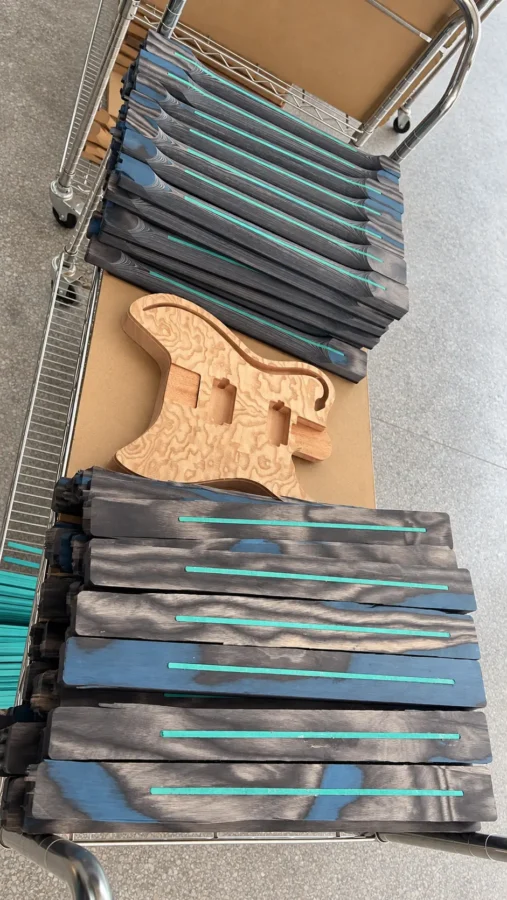
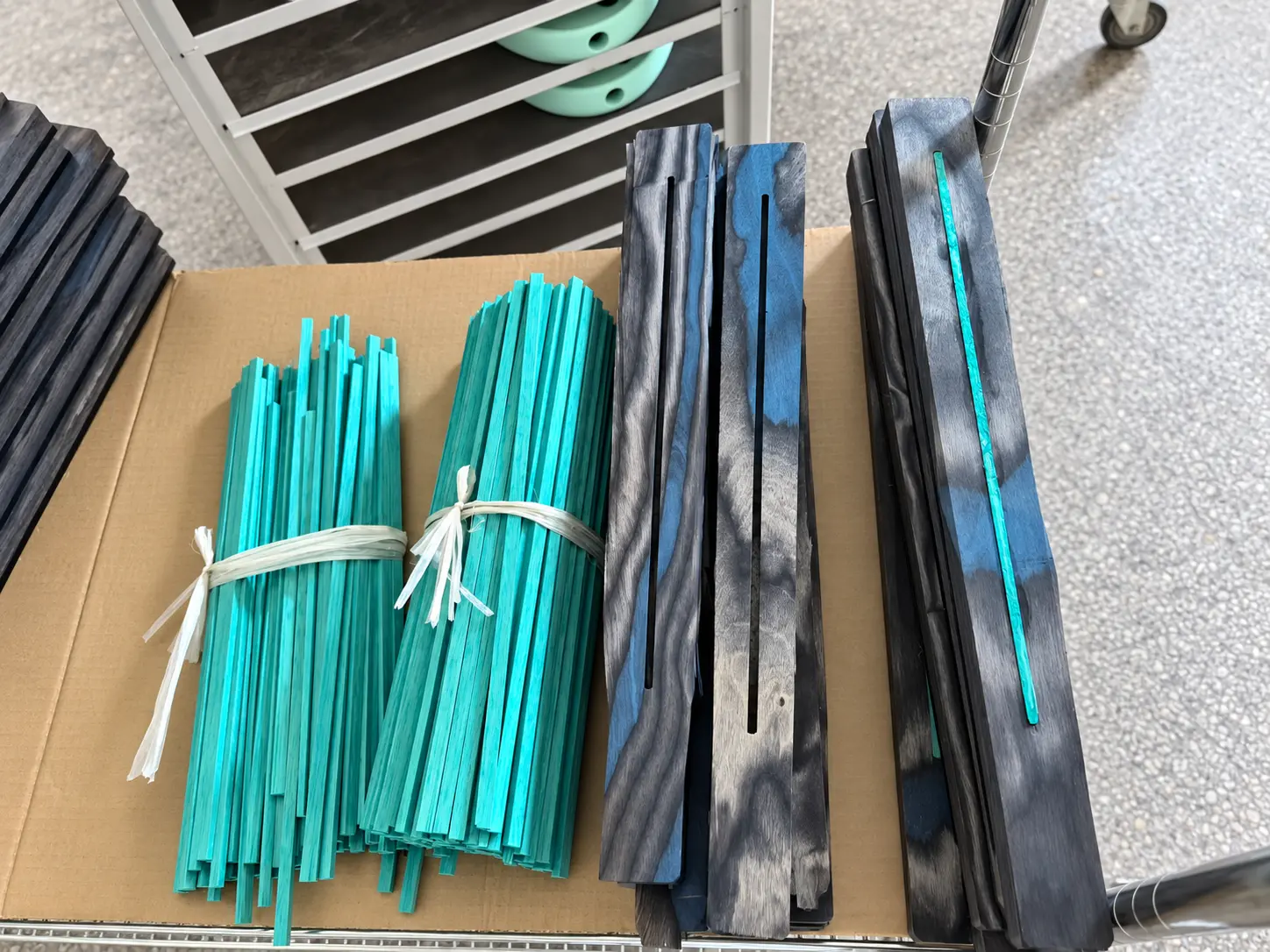
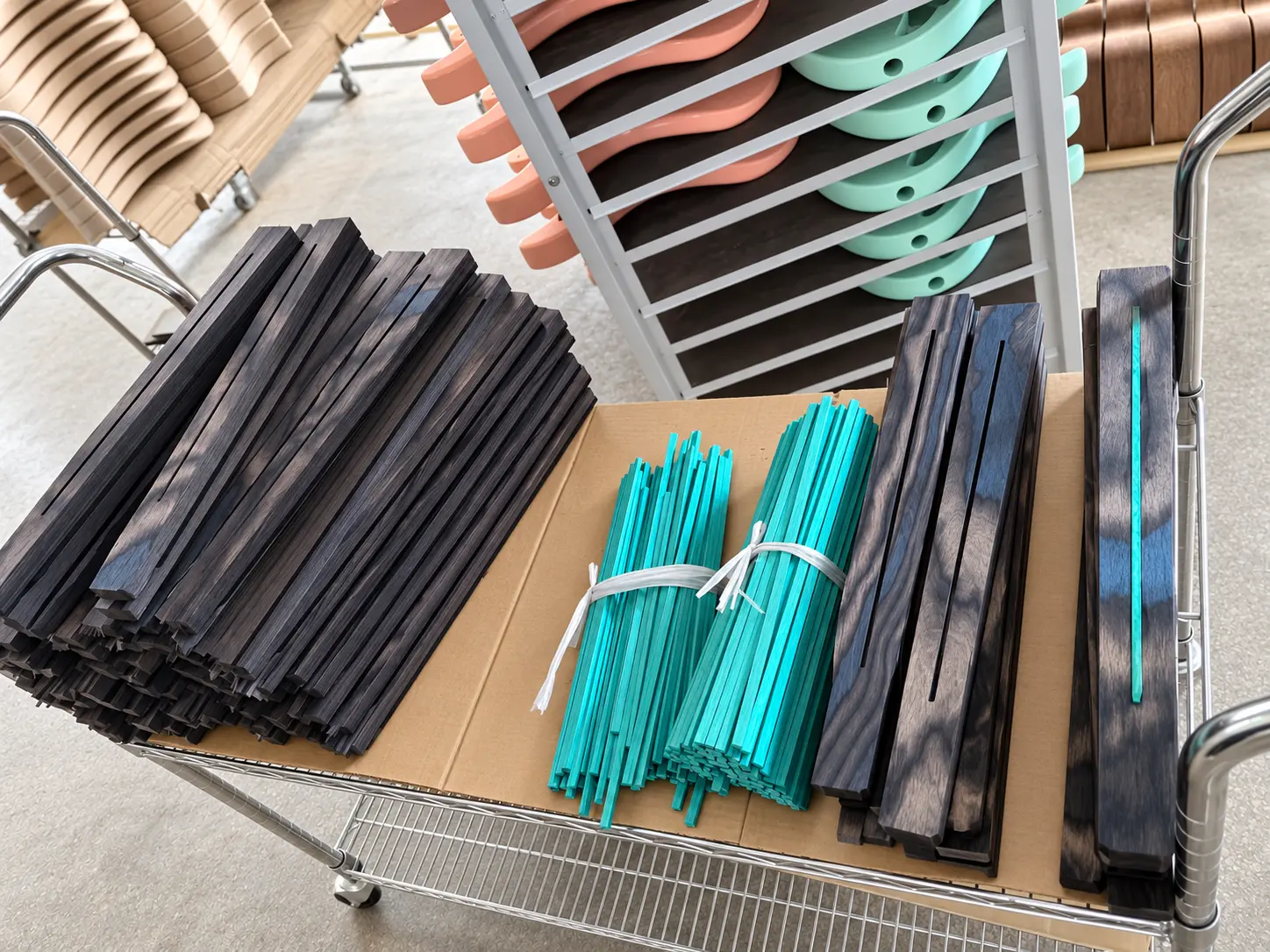
Earlier in AfterLife’s story, there are dark lengths of layered composite and slender turquoise strips waiting to become part of that form. As the neck takes shape, the coloured centre line remains, running through the changing patterns of the surrounding material. The layers give the surface its own quiet rhythm.
From separate pieces to a familiar curve
The C-shaped profile brings those straight beginnings into a rounded form intended to sit comfortably in the hand. Its shape must continue along the neck and meet the broader heel at the body. Care at these transitions matters because the player encounters them through touch, often without looking.
Beneath the black composite fretboard, two carbon-fibre rods provide reinforcement alongside a two-way truss rod. The spoke-wheel adjustment gives access to the adjustable part of this structure. Each element has its own role within the neck, carried quietly beneath the playing surface.
Above it, the rolled bullet edges of the stainless-steel frets bring the same consideration to the places a hand may brush as it moves. The curve behind the fingers and the details beside them belong to one continuous experience.
Eventually, the separate pieces are simply the neck of a guitar. You reach for a chord, follow it with another, and begin to learn that particular shape. The workshop has brought it this far; familiarity grows with every return to playing.