




Every string has its place
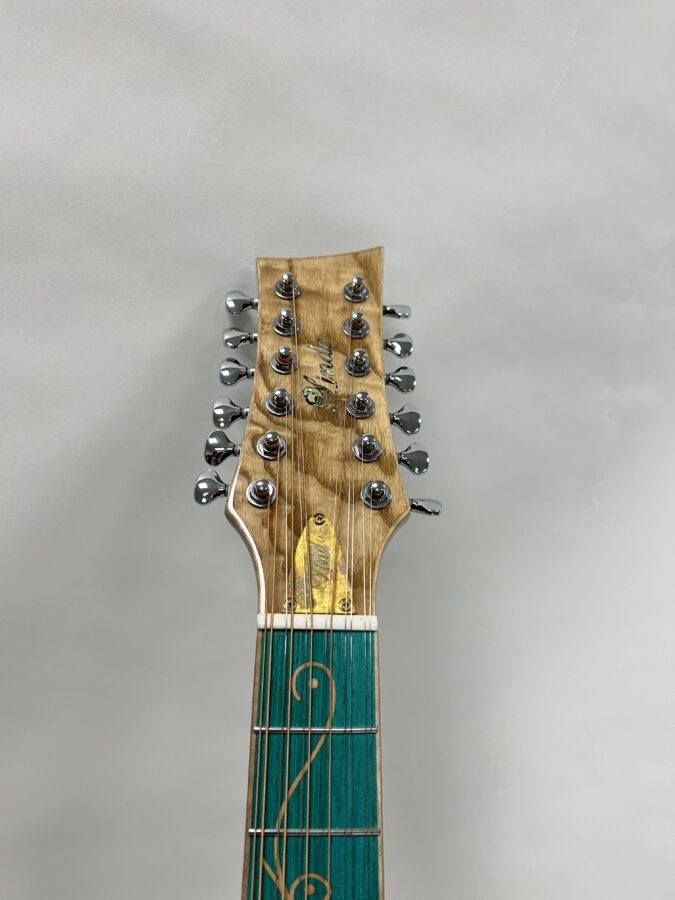
Six pairs of strings give the Earth 12 its distinctive playing format. Follow their paths from the extended headstock to the bridge, where individual tuning and carefully arranged support bring the twelve strings together.
The Earth 12 journal · 01 / 6
There is a little ritual to meeting a twelve-string. You settle it against you, find a familiar chord and notice the extra strings beside the ones your fingers expected. On the Earth 12, those six close pairs turn a familiar outline into an invitation to spend a little longer with the instrument.
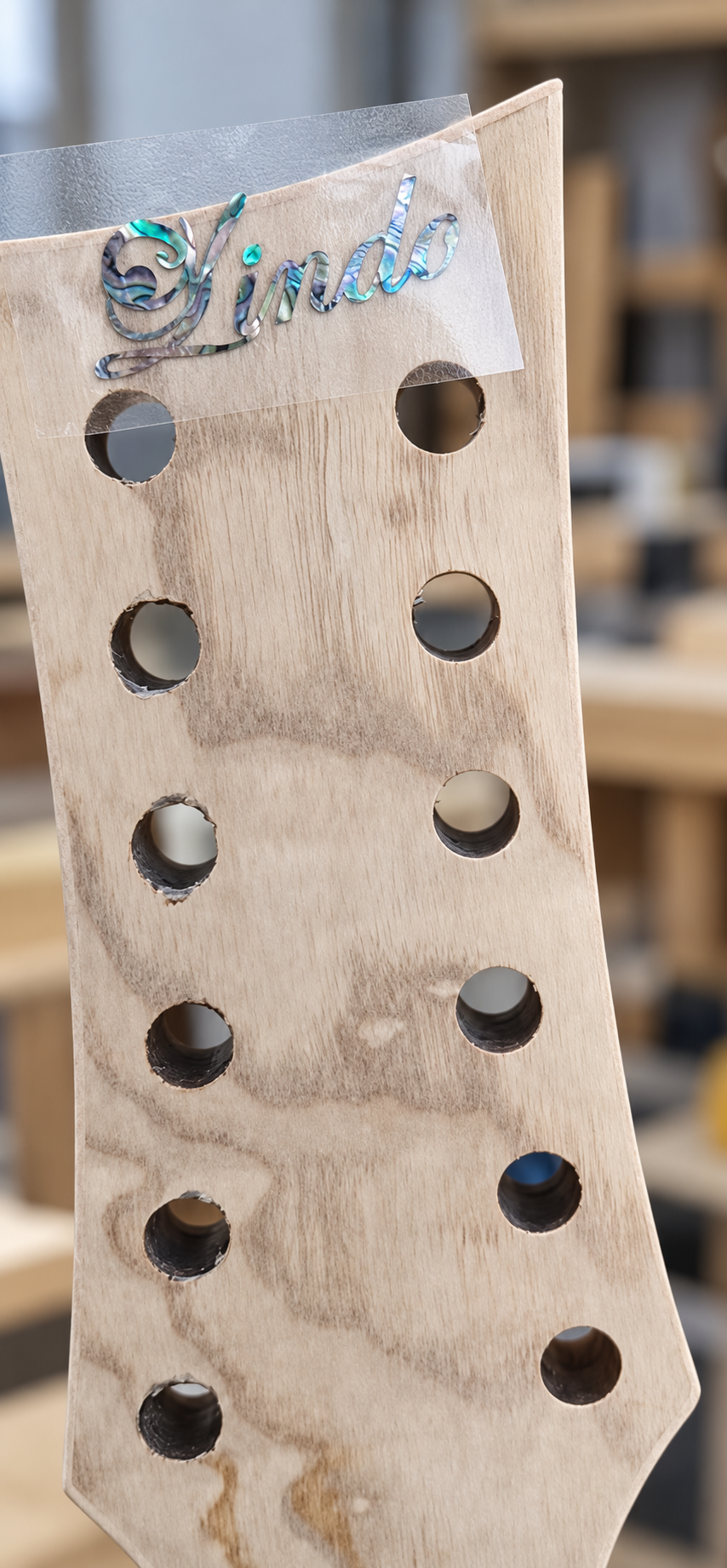
That arrangement asks for attention at both ends of the guitar. Every string needs its own tuning adjustment, even when it is played alongside a neighbour. Six chrome machine heads line each side of the extended headstock, keeping all twelve adjustments accessible as you work through the pairs.
From the tuning key to the bridge
The machine heads use a 19:1 ratio. Their gearing turns a movement of the button into a smaller movement at the string post, giving you a way to approach the pitch gradually. With twelve strings to bring into tune, those small, controlled adjustments are part of getting ready to play.
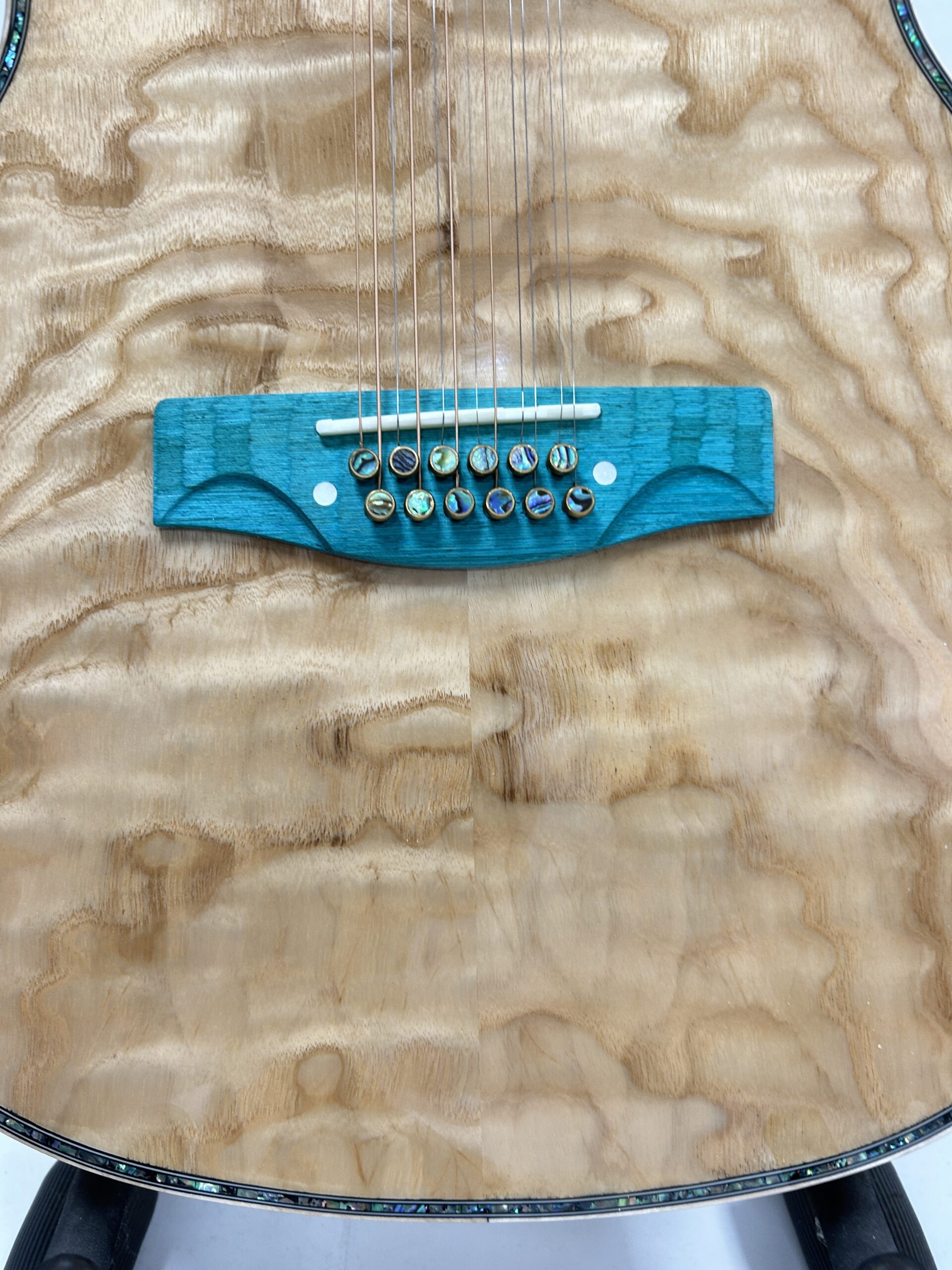
Follow the strings towards the body and their separate paths meet the bridge. Twelve brass pins sit in two rows, securing the string ends within the bridge assembly. Each pin has an abalone dot, adding a small glint of shell to a detail with a practical job to do.
Just ahead of the pins, a compensated bone saddle supports the strings. Its shaped contact points allow for the different lengths needed to help notes remain in tune as they are fretted. At the other end of the playing length, the nut guides the strings into their paired arrangement.
Tuning, fretting and returning to a chord bring these parts into use together. You can adjust one string, check it beside its partner and carry on through the six pairs. The extended headstock and double row of pins begin to make sense through that simple routine: twelve strings, each with a place of its own.