




Two woods, one character
The Earth 12 brings two contrasting grains into one body. Rippling Tamo ash meets the longer lines of Zebrano, with maple binding and abalone borders giving each surface a clear, carefully framed outline.
The Earth 12 journal · 03 / 6
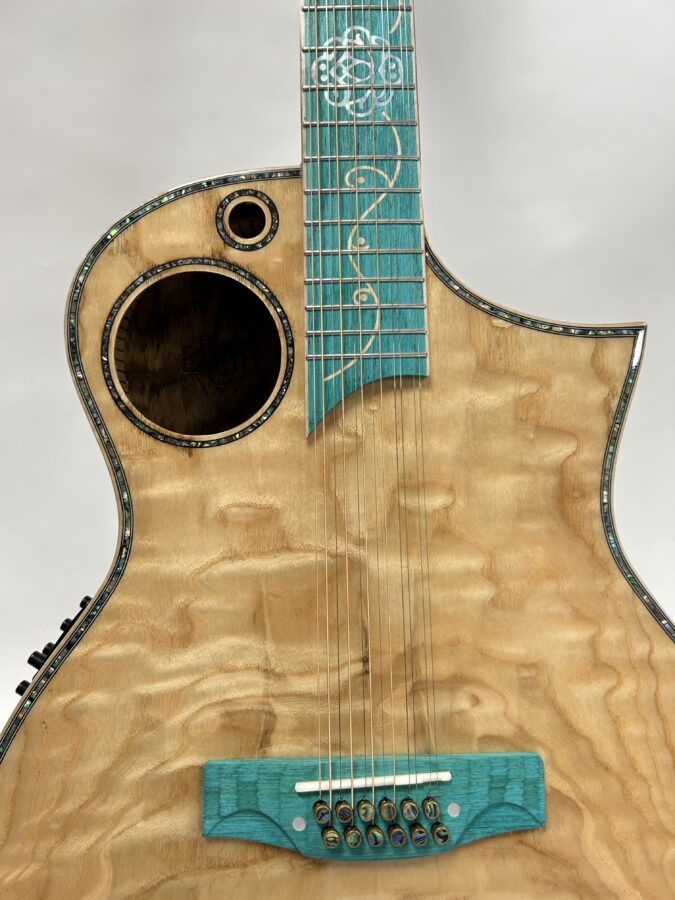
Turn the Earth 12 towards the light and the Tamo ash begins to reveal its figure. Across the front, pale and darker areas form soft ripples through the wood. A slight change of angle brings another part forward, so the surface has more to offer than its first impression.
The grain has room to spread beneath the strings and around the bridge. Warm natural colouring sits beside the cooler teal details, letting the wood and the fitted parts remain easy to distinguish. The irregular patterns also give this individual instrument details you can come to recognise.
Following the grain around the body
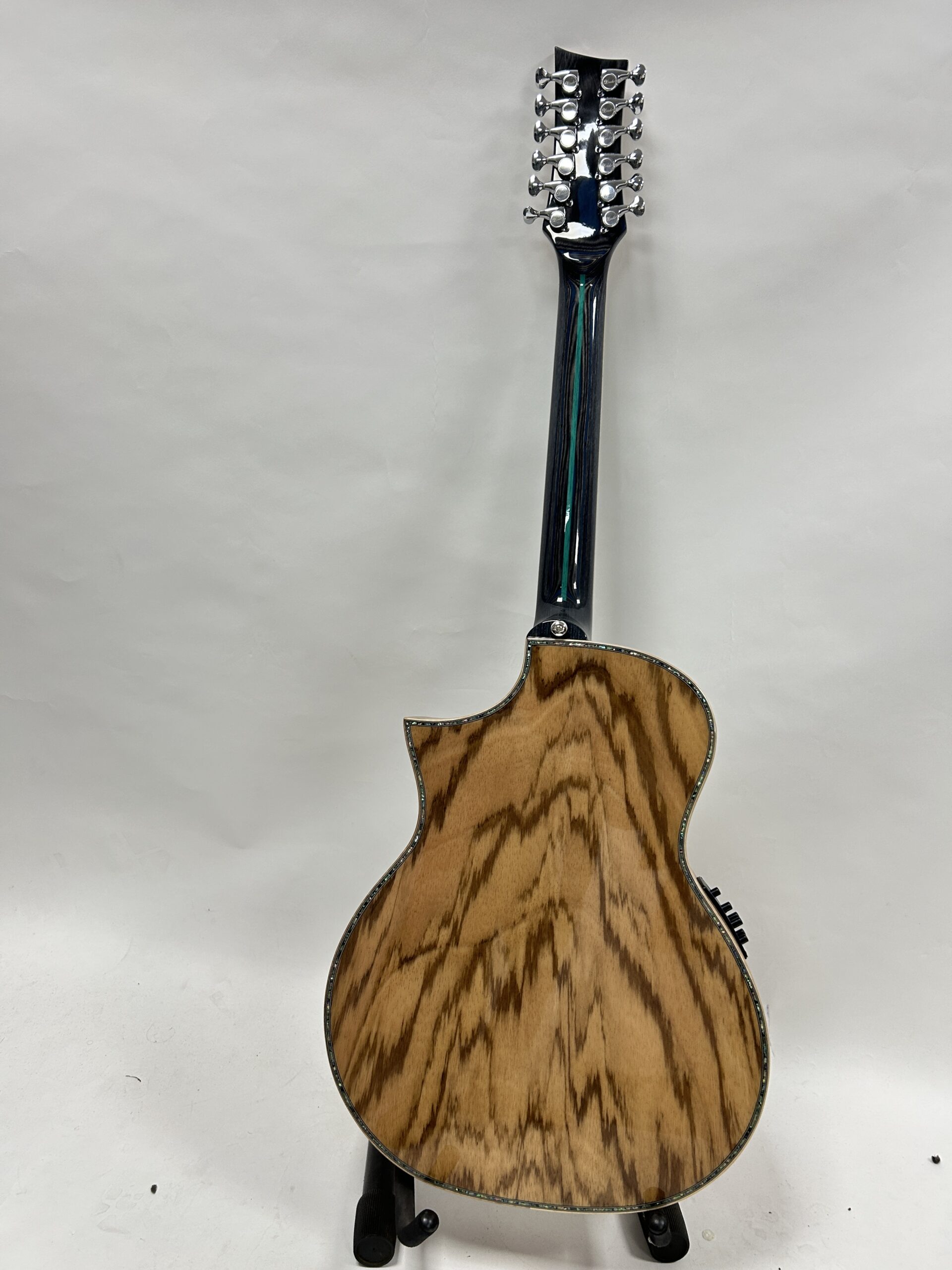
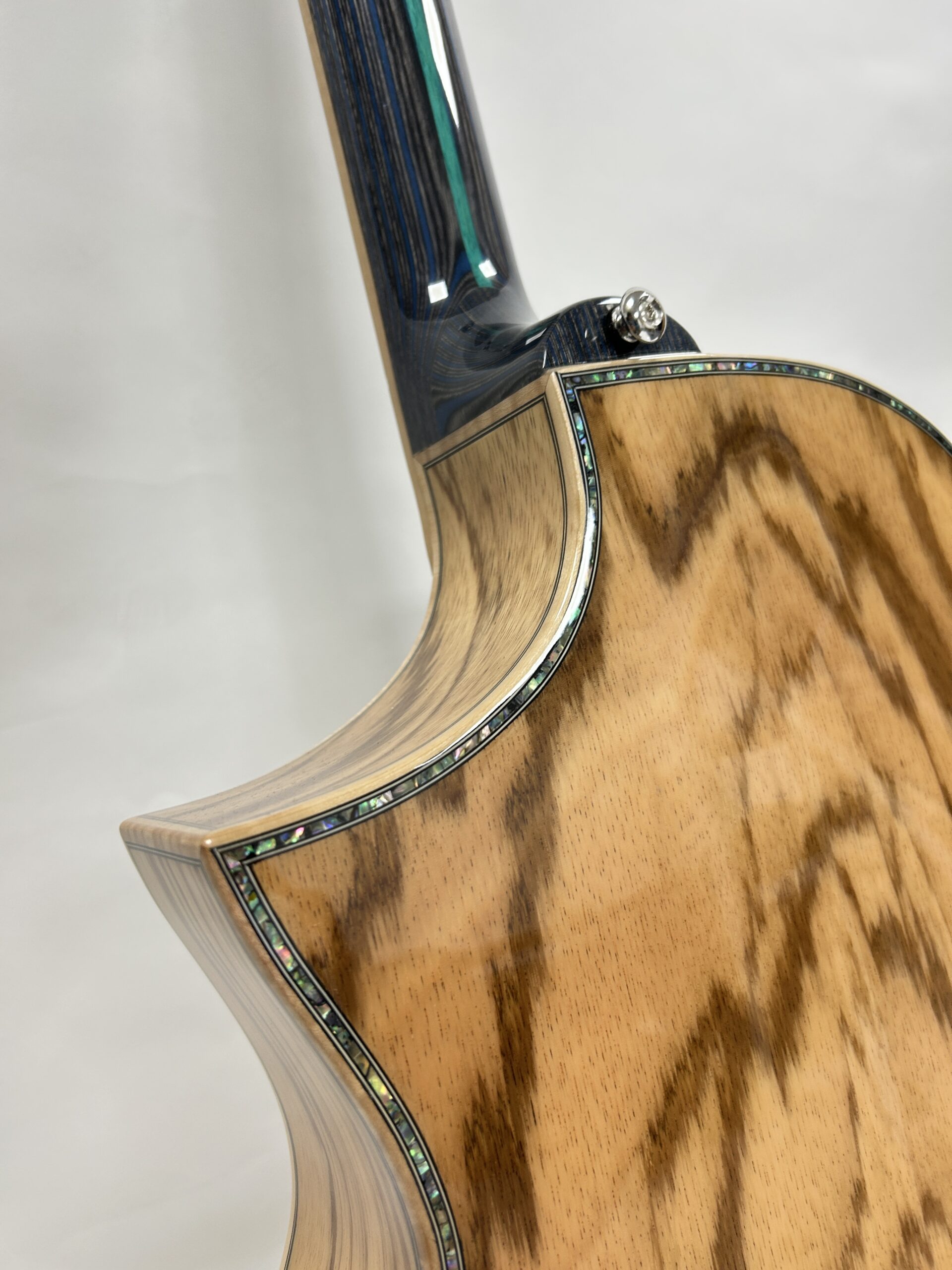
Around the side, the pattern takes a different direction. The Zebrano introduces longer, darker lines that continue across the back. As the body turns, those stripes describe its curves and waist, carrying the eye from a broad surface towards the narrower places where the different parts meet.
Maple binding marks the boundary between these surfaces. Its pale line follows the outline, including the turn into the cutaway, separating the changing grain with a clear edge. Just inside it, abalone purfling adds small flashes of colour around the front and back, where a closer look reveals another layer of detail.
The gloss finish makes light part of the encounter. Reflections travel across the body as it moves, changing which areas of grain are easiest to see. Along the edge, a narrow highlight can trace the curve before giving way to the darker lines around the side.
Once you have explored the whole body, the front looks a little different too. It belongs to a guitar with another pattern waiting on the reverse and fine borders linking the two. A particular ripple or stripe can become its own point of recognition, as familiar as the instrument’s outline.