




A familiar shape finds its acoustic voice
The Koya began with an electric guitar. For the electro acoustic prototype, a familiar cutaway and a Japanese landscape found a new home on a shallow, full-size acoustic body.
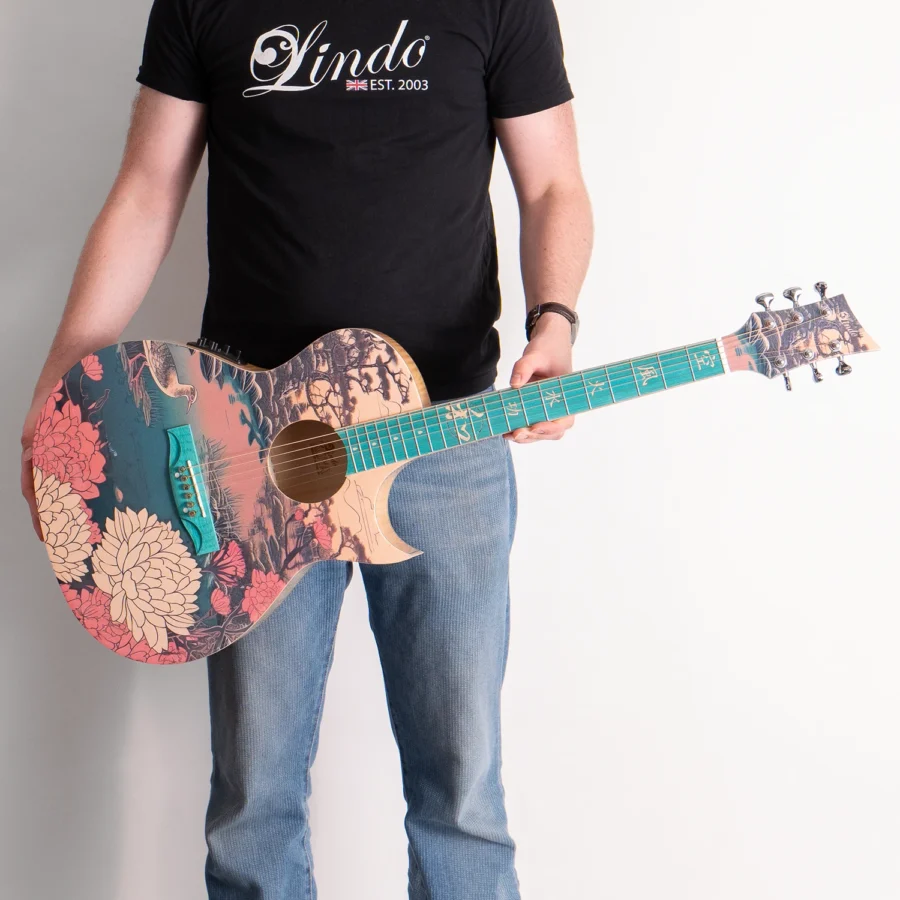
The Koya Acoustic journal · 01 / 8
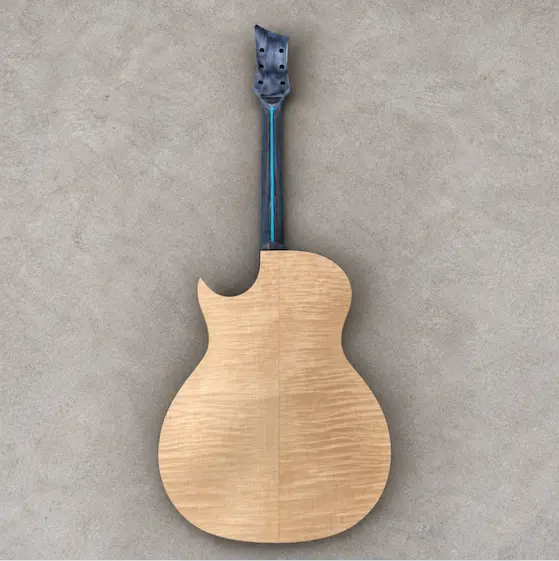
Set the Koya on your knee for a moment, before you play. There is a point to the cutaway where the body meets the neck, softened by the curve that runs down to the waist. If you know the original Koya electric, you may recognise something in that outline. The two instruments share a family resemblance, even when viewed from the back.
When Lindo took the Koya in an acoustic direction, the idea had to work in the hands as well as on paper. A wooden body now sat beneath the right arm, with a spruce soundboard and a soundhole interrupting the landscape on its face. The proportions of the guitar had to make room for all of that.

A shallower body, a full-length reach
Prototype #1 is full-size, with a 25.5-inch scale and an 80 mm body depth. Sit with it and that combination becomes easier to understand. The scale keeps the familiar spacing under the fretting hand, while the shallow body gives the other arm less depth to reach across. You can see the relationship particularly well from the side.
The cutaway has a purpose here too. As the left hand travels towards the body, the curve makes more room to reach notes higher up the neck. It is a useful shape to have when a quiet chord passage turns into a melody, and your hand needs to follow it a little farther.
Turn the guitar back towards you and the pink and blue of the artwork come into view again. That is where the family resemblance began. On the acoustic, it is also the surface you return to when you put the guitar on its stand and the room grows quiet.