




Before the first note
Before the Koya carries a landscape, its spruce soundboard has a quieter story. The unstrung bodies in the workshop offer a chance to look at the shape that will give the strings room to speak.
The Koya Acoustic journal · 02 / 8
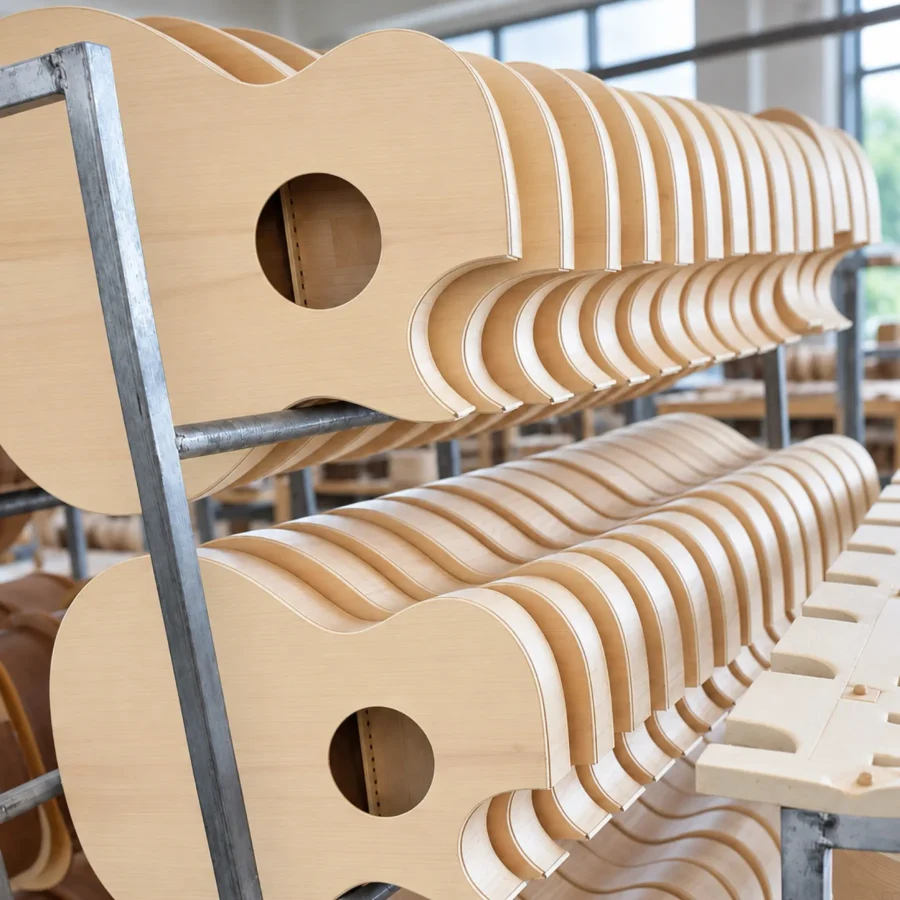
There is a moment in the build when the soundhole is open and there is little else to draw the eye. You can follow the pale lines across the spruce, past the opening, and out towards the edge. Along the workshop rack those curves repeat. In the finished Koya, the same face will hold a landscape. Here there is room to notice the wood beneath it.
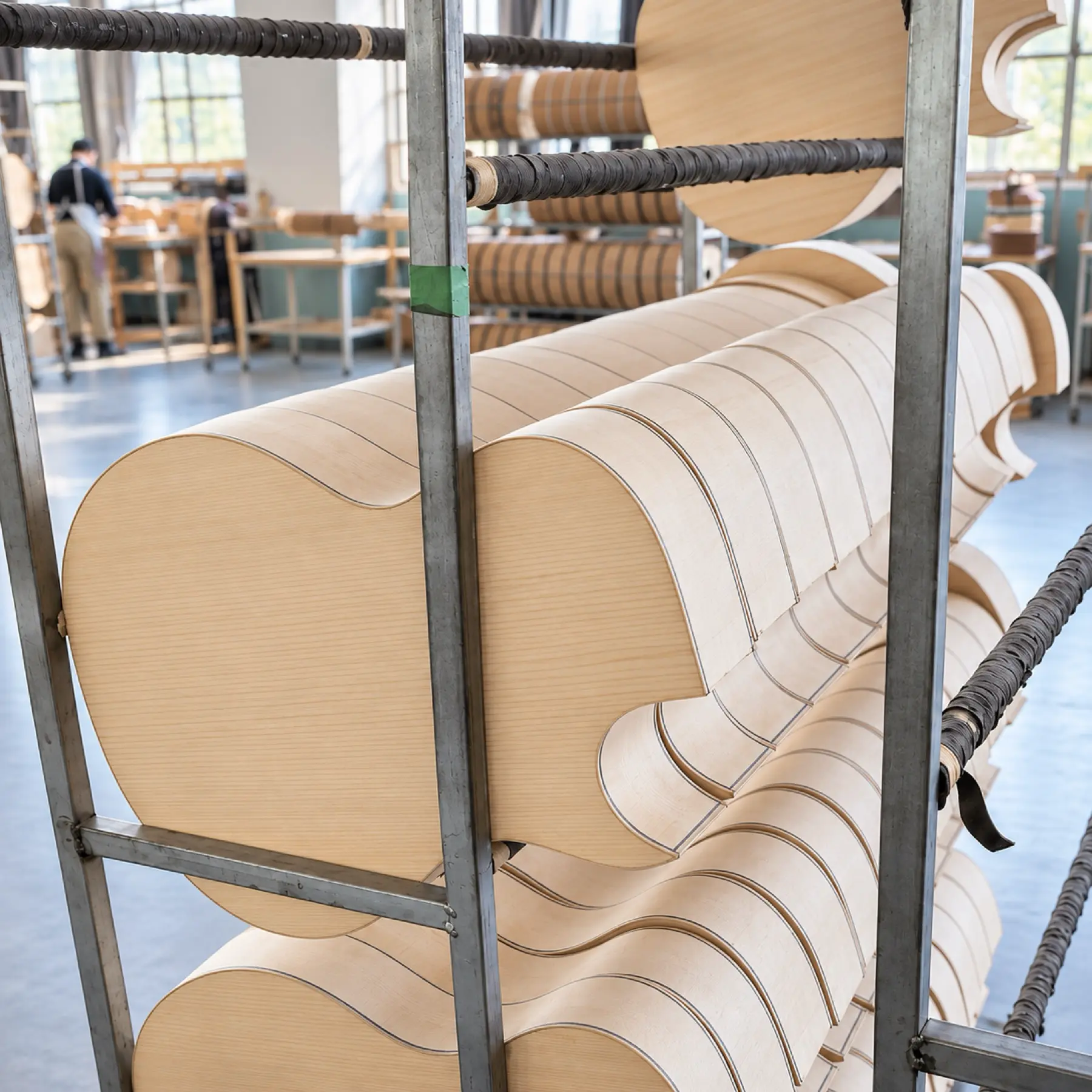
At the waist the outline narrows before opening into the lower bout. Look along the edge and the pale top gives way to the curved side. In the rack, the repeating outlines make it easier to see how each of those surfaces has to meet the next.
What the soundboard will do
When the Koya is strung, the bridge will pass the motion of the strings into the spruce soundboard. The top moves in response, helping to turn the small vibration of a plucked string into sound in the room. At this stage, the part that will do so much of that work is simply resting on a rack.
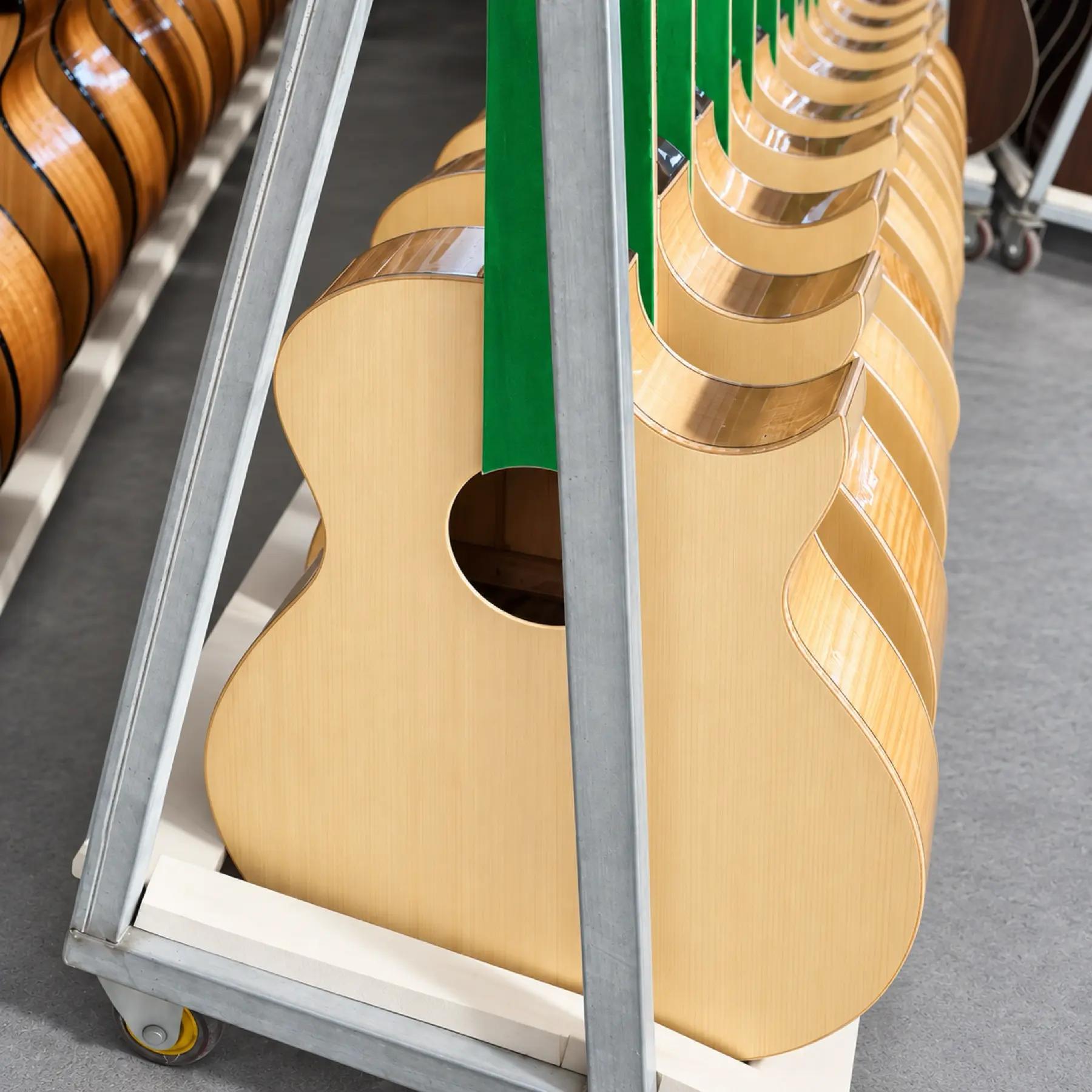
Farther along in the build, the neck is in place and there is still green tape over the fingerboard area. The pale wood around the soundhole can be seen from this angle too. The tape belongs to this part of the job, while the surfaces are still being worked around.
Once the artwork is there, it is natural to look first at the picture. The spruce underneath still does its work, moving in response to each change in the way the strings are played.
Put the finished guitar in someone’s lap and the workshop feels a long way away. A note begins under a fingertip, and the pale surface that once had the room to itself starts to move.