




When the light finds the maple
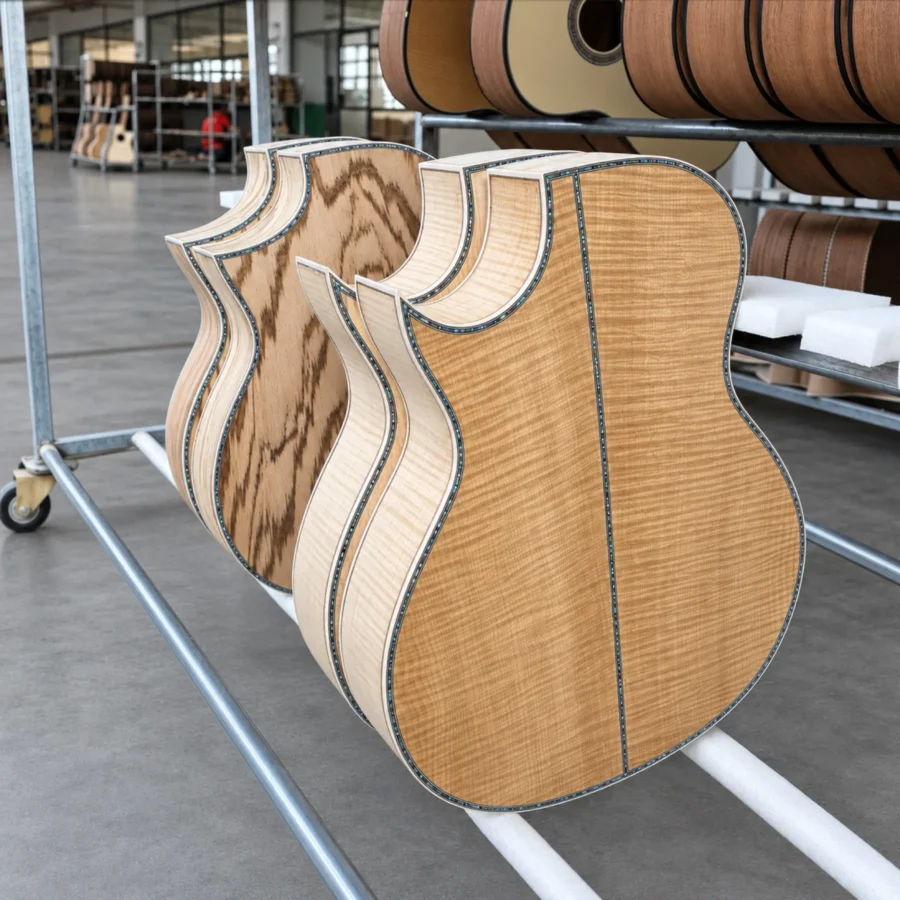
The Koya’s figured maple can look quiet at one angle and reveal a whole run of ripples at the next. Follow the back and sides to see how those variations meet the fine lines of the body’s edge.
The Koya Acoustic journal · 03 / 8
A guitar can spend a whole song with its back hidden against the player. You might first notice the maple afterwards, while lifting the Koya from your lap or turning it towards the light. The pale and amber bands come into view a few at a time. Tilt the body a little farther and a different part of the figure catches your eye.
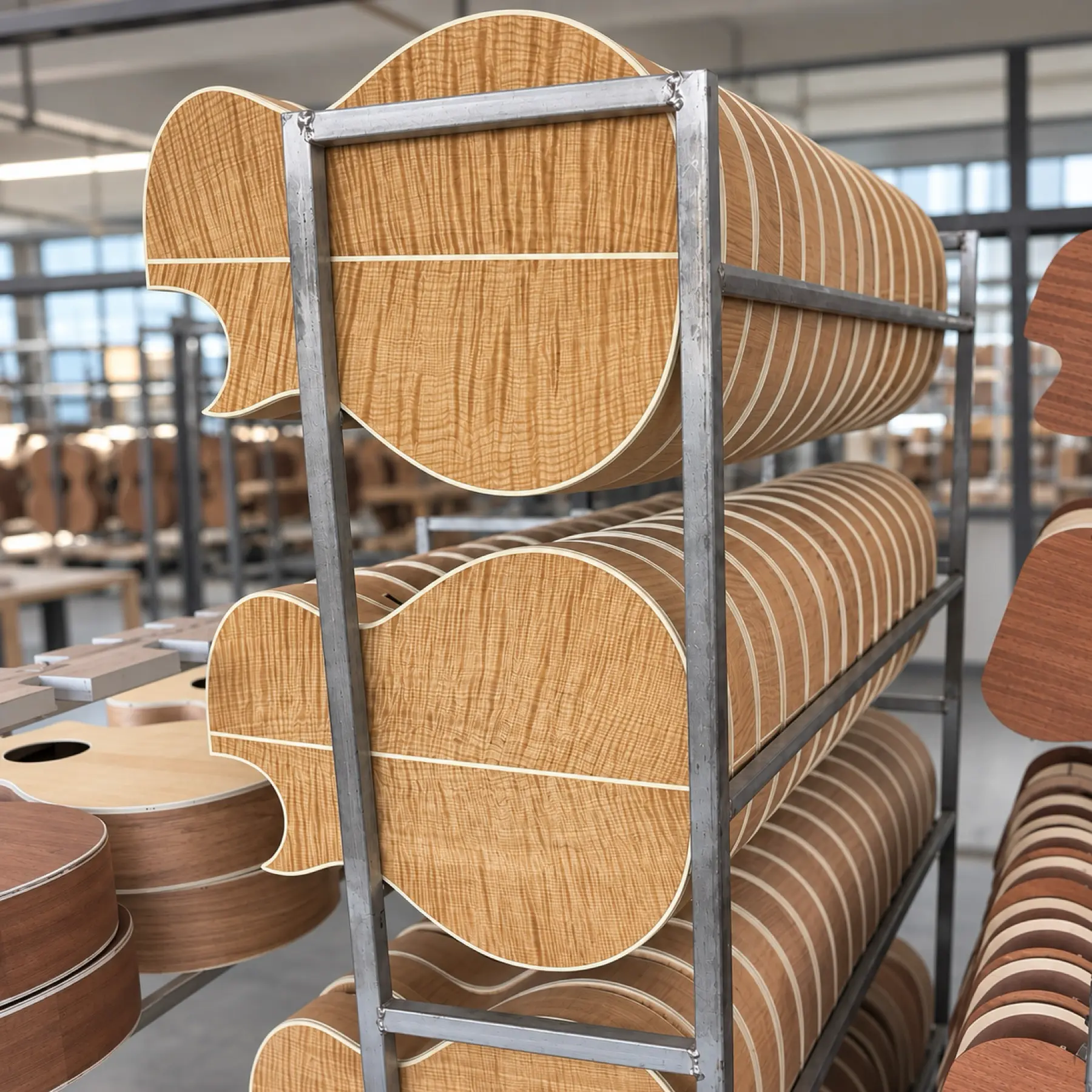
In the workshop, the same body shape appears again and again. The figure changes from one back to the next. Across the Koya’s maple back and sides, it gives each instrument small details of its own, the kind the player might begin to recognise before anyone else does.
Following the edge
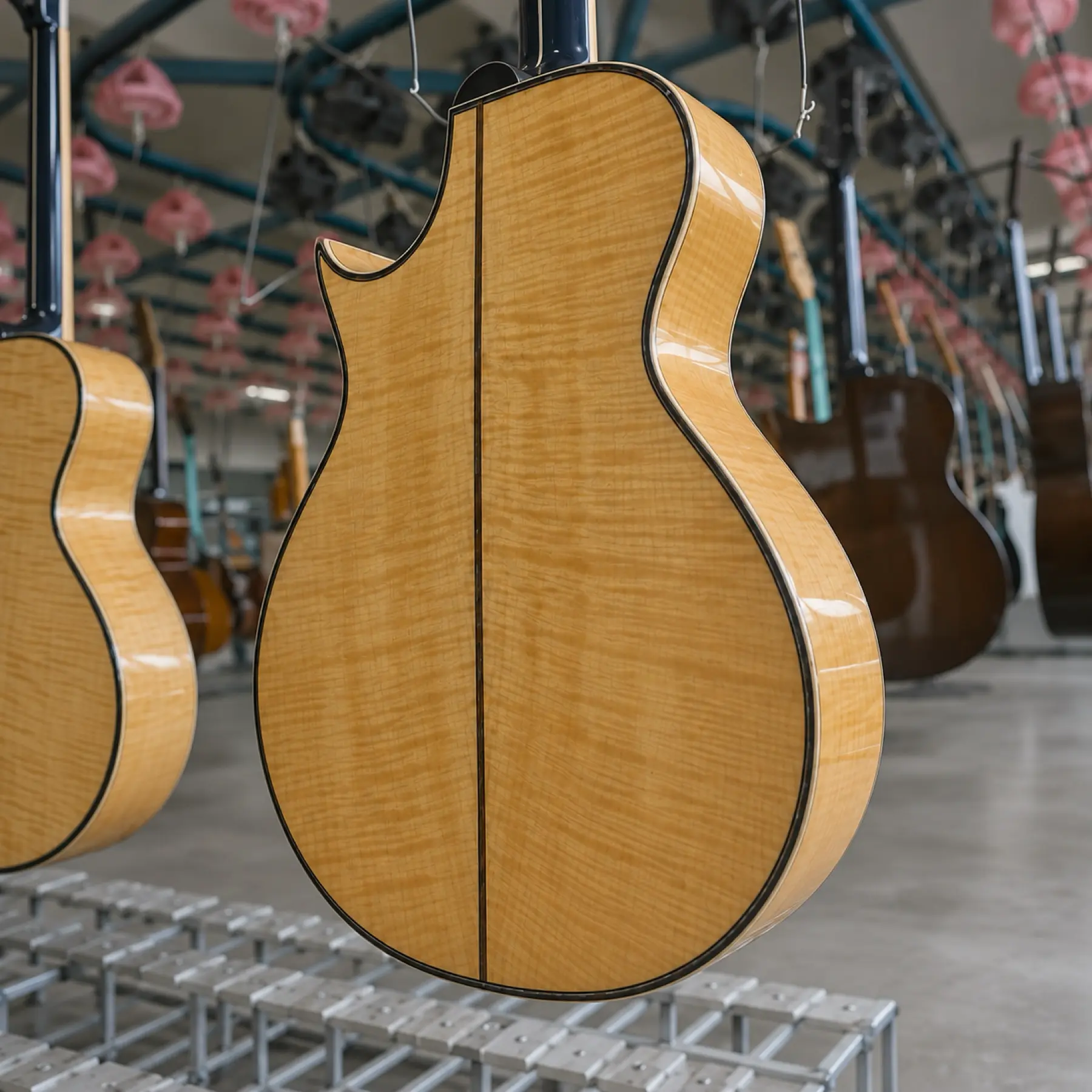
On the back of the prototype, the abalone purfling adds a narrow line of colour beside the wood. Look near the waist, where the border follows a tight turn, then out along the broad curve below. The maple binding defines the edge and the shell adds a little colour, with most of the surface left to the figure itself.
A hanging guitar offers another angle on the sides. The reflection follows the curve, changing width as the surface turns away. Where the light passes over the figure, the maple can seem almost plain for a second before the ripples come back into view.
The front carries the Koya’s landscape. The back asks for a smaller gesture: a turn of the wrist, a moment standing near a window.
It is a detail that feels particularly personal because so much of a song is played with this side of the guitar turned inwards.