




The river under your hand
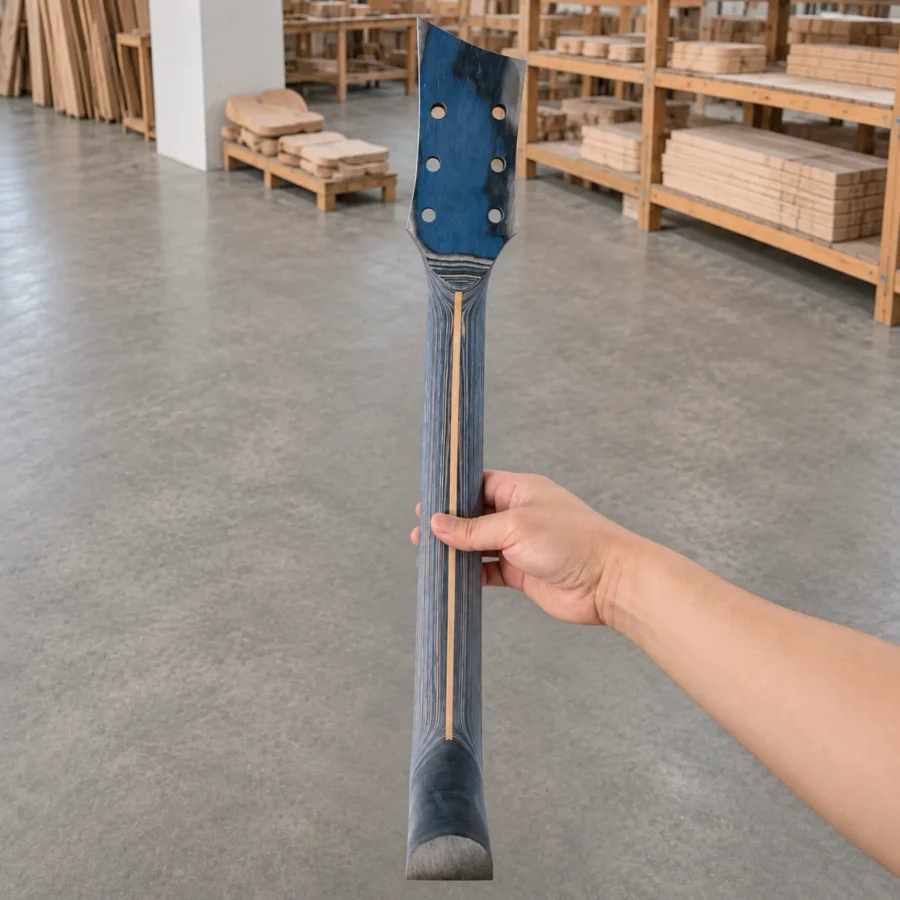
A line of figured maple runs along the back of the Koya’s neck. It is one of the quieter details of the design, and a place to begin looking at what the neck does for the player.
The Koya Acoustic journal · 04 / 8
Some details of a guitar are easier to see while it is still being made. Here, a neck is held by itself in a workshop, with the small pale line down its back visible from the headstock end towards the heel. On the Koya, that figured maple line has a name: the River. It runs through the blue that will sit against the player’s palm.
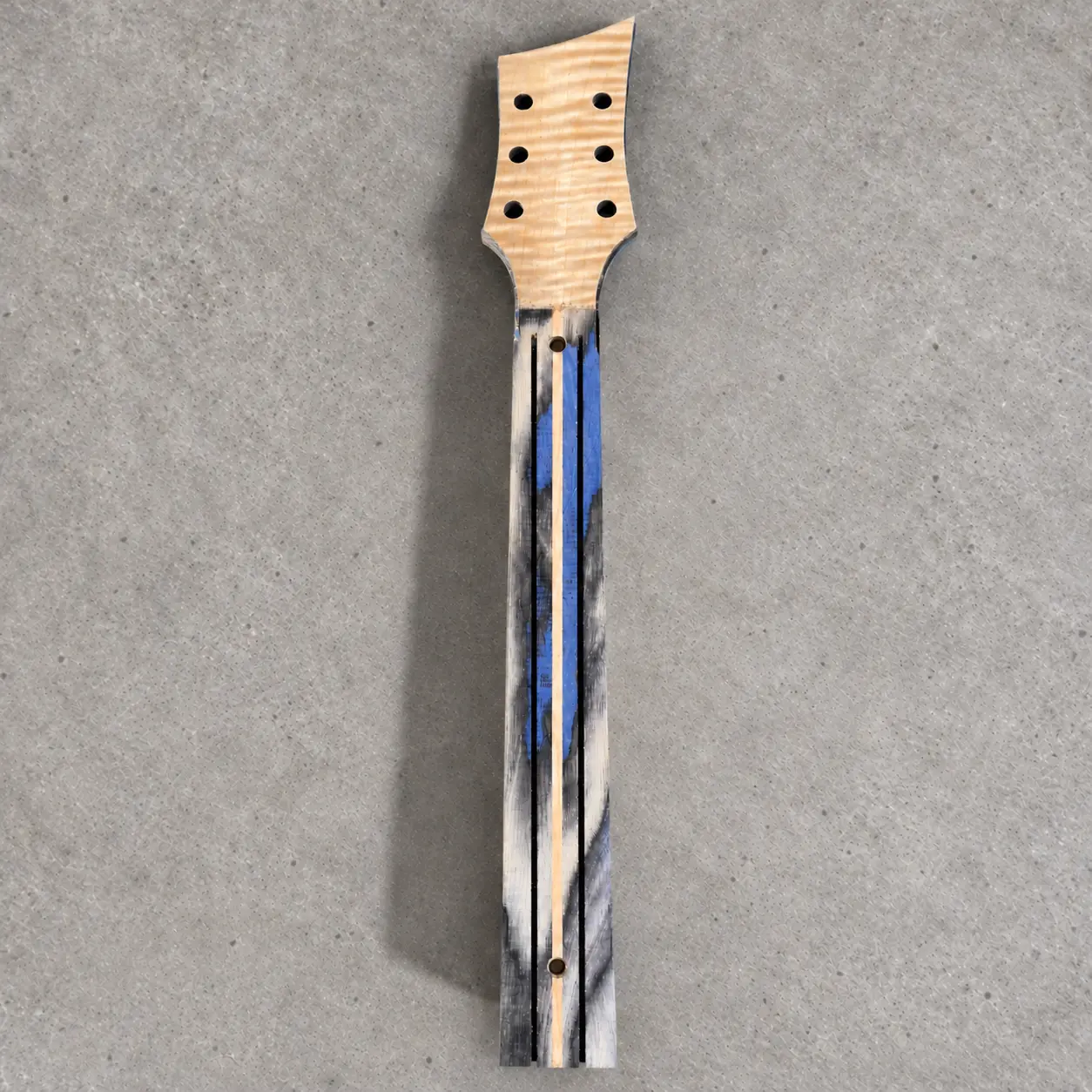
An unfinished neck seen from the other side lets you see the long channels and the bare surface where the fingerboard will sit. Once that playing surface is in place, a player will know the neck mostly by following it with the hand.
The part the hand learns
The Koya prototype uses a composite neck with two carbon fibre support rods. They help the neck resist bending under string tension. The two-way truss rod has a different job: it lets a technician adjust relief, the slight lengthwise curve that helps give vibrating strings room above the frets.
That adjustment is part of how a guitar can be set up to feel right. In the hand, the experience also comes down to a shape you can recognise. The Koya’s C profile gives the thumb a rounded surface to move along as the fingers travel from a chord to a higher note.
Seen from the back, the small maple line still has room to command your attention. In use it often stays out of sight for an entire song.
When you pick up the Koya again, you may already know where the neck begins to feel familiar. The curve guides the palm along the length of the River, even as the hand is busy with the next phrase.