




The Curve That Opens AfterLife
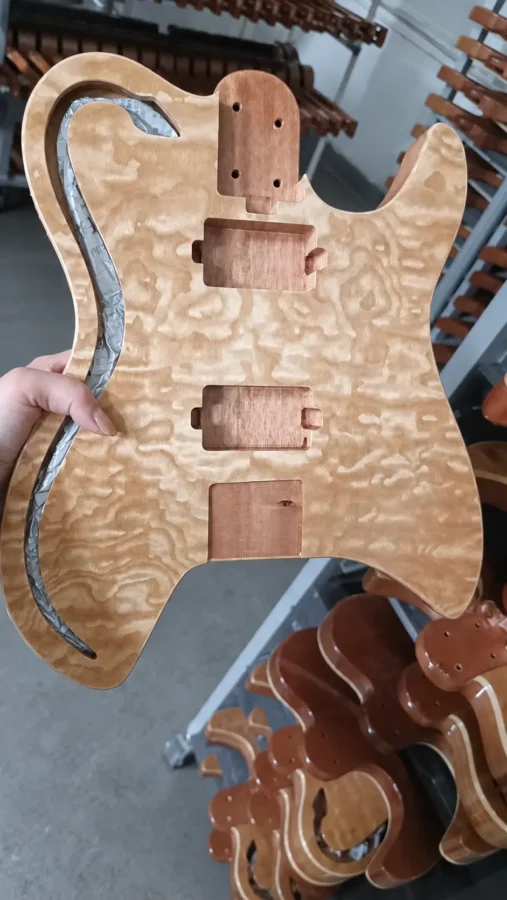
Along one side of AfterLife, a dark curve moves through the natural wood. Its snake-shaped opening gives the body a distinctive line and offers a small glimpse of the chambered construction beneath.
The AfterLife journal · 02 / 8
The eye often follows a curve before it notices anything else. On AfterLife, it starts near the upper shoulder, bends around a small rounded head and travels down towards the lower edge. Against the warm figure of the top, that darker line gives you a clear path to follow.
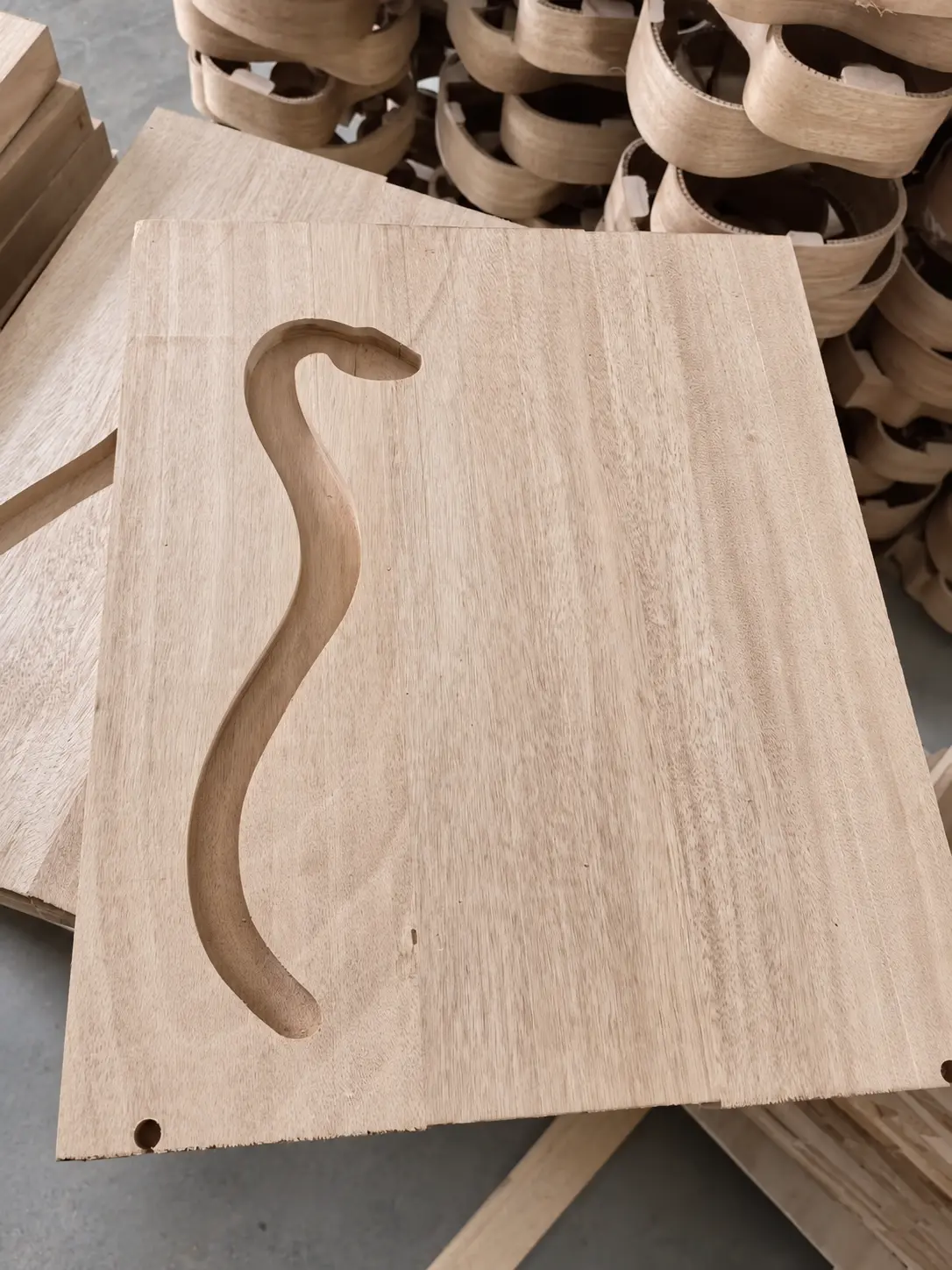
The shape begins to emerge while the material still has a simple rectangular outline. At that stage, the long opening can be considered on its own: the turn at the top, the sweep through the middle and the narrowing end. As the surrounding body takes shape, those small changes become part of a larger silhouette.
A line with somewhere to lead
Its purpose belongs to the construction as well as the appearance. The opening leads into the chambered body, making a little of the inside visible from the front. It sits alongside the space occupied by the pickups and bridge, so the expressive curve and the working layout share the same surface.
That relationship asks for care around the inner edge. A long, narrow opening has its own outline to follow, separate from the perimeter of the guitar. The thickness of the surrounding wood becomes visible here, and the curve has to feel connected from its broadest turn to its final taper. Even before finishing, it gives the body a recognisable character.
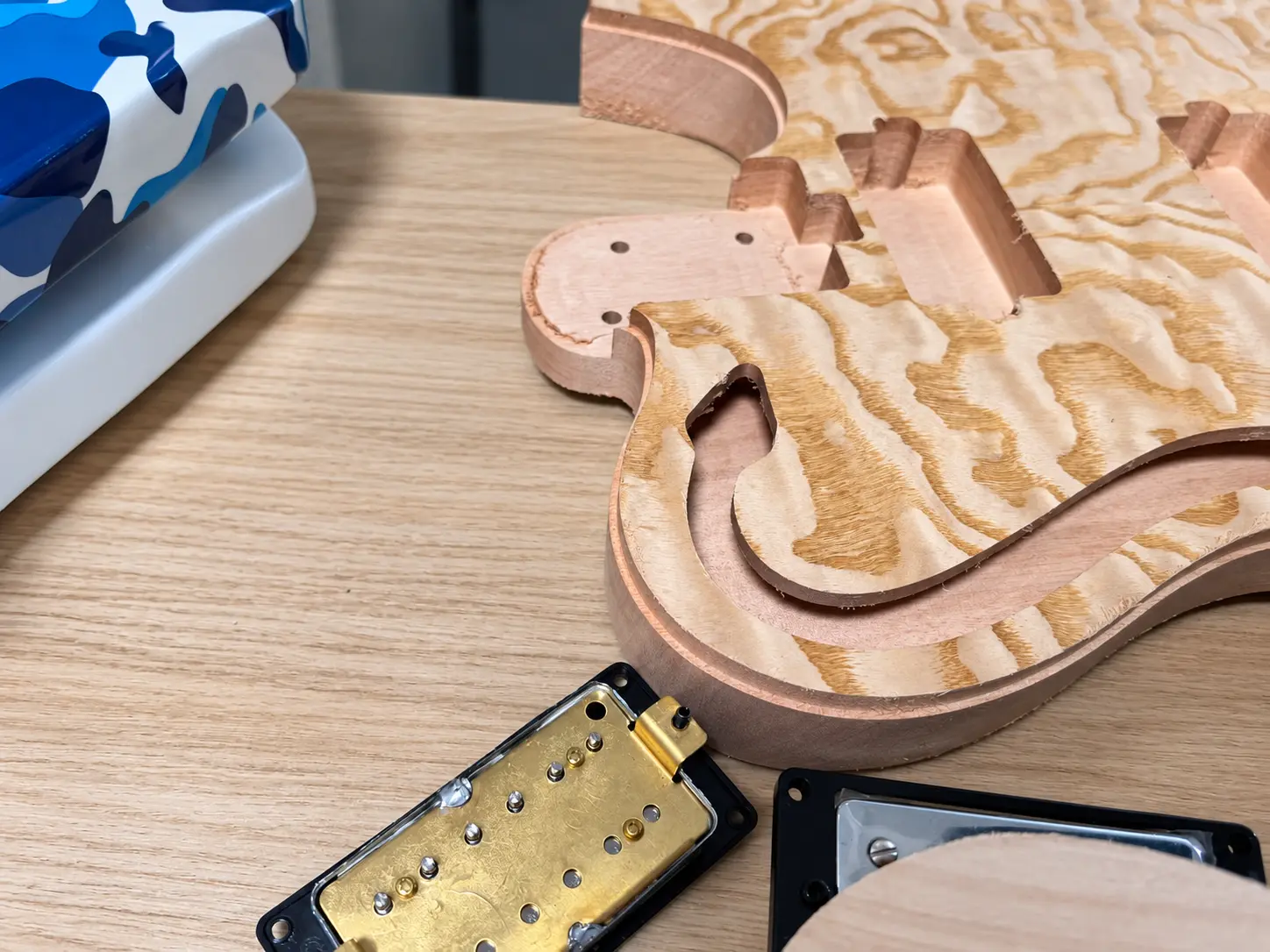
Once the guitar is assembled, the line remains easy to find between the moving grain and the reflections of the hardware. It offers a quieter detail to return to while the instrument rests on your knee. The outside suggests where to look; the opening lets the design continue a little further in.